


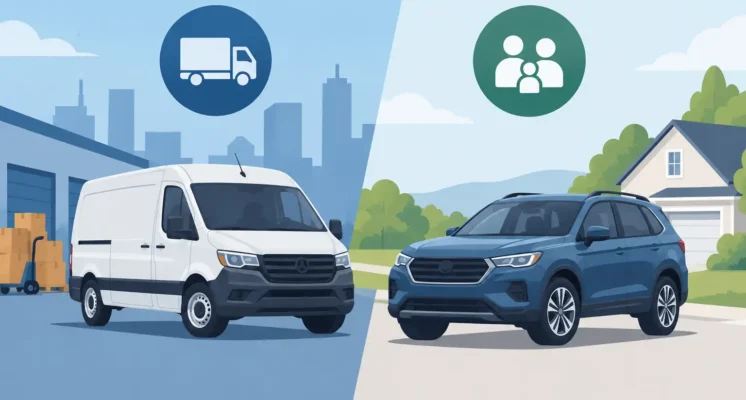
Commercial Auto Versus Personal Auto: Key Differences
A vehicle can look the same in the driveway or parking lot, yet the insurance behind it may need to be very different. The question of commercial auto versus personal auto usually comes down to more than who holds the title. It comes down to how the vehicle supports your work, who drives it, what it carries, and the financial responsibility you take on each time it enters traffic.
For Naples families and business owners, that distinction can become especially meaningful. A personal SUV may occasionally carry a laptop to the office without changing the insurance conversation. But regular client visits, employee errands, deliveries, tools, equipment, or a vehicle owned by a business can create exposures a personal policy was not designed to address. The right answer is rarely a matter of simply choosing the less expensive policy. It is about aligning protection with real life.
Commercial Auto Versus Personal Auto: The Core Difference
Personal auto insurance is designed for vehicles used primarily for personal, household, and commuting purposes. It can generally provide liability coverage for injuries or property damage you cause, as well as protection for your own vehicle through collision or comprehensive coverage when selected. Depending on the policy, it may also include uninsured motorist coverage, medical payments coverage, roadside assistance, and rental reimbursement.
Commercial auto insurance is designed for vehicles used in connection with a business. It can insure a vehicle owned by a company, but ownership is only part of the picture. Commercial coverage is often appropriate when a business uses vehicles regularly, allows employees to drive, transports goods or people, carries specialized equipment, or faces higher liability expectations because of its operations.
The central issue is not whether you call yourself a business owner while driving. An insurer will look at the vehicle’s actual use. A restaurant making recurring deliveries, a contractor transporting equipment, a church using a van for member transportation, and a real estate team sending employees to property appointments all have different risk profiles from a family running weekend errands.
When Personal Auto Coverage May Be Enough
Many professionals use a personal vehicle in ways that remain within the scope of a personal policy. Commuting to a regular workplace is the clearest example. Driving to a meeting from time to time, bringing a presentation to a client, or using your own car for ordinary business travel may also be acceptable under many policies.
That said, the details matter. Insurance carriers use different underwriting guidelines, and a policy’s listed usage category matters. If you are self-employed, frequently visit job sites, transport business property, or receive reimbursement for mileage, it is wise to disclose that use rather than assume it is covered. A quick conversation before a claim is far easier than an uncomfortable coverage question after an accident.
Personal auto policies may also limit or exclude certain activities. Delivery work, transporting passengers for a fee, livery use, and regular business delivery are common examples that can require a specialized endorsement or commercial coverage. Rideshare driving often has its own set of coverage considerations, particularly during periods when an app is on but a passenger is not yet in the vehicle.
Signs Your Business May Need Commercial Auto Insurance
Some situations make the case for commercial coverage much clearer. If the vehicle is titled to an LLC, corporation, nonprofit, church, or other organization, commercial auto insurance is often the appropriate starting point. The business should be able to insure, manage, and protect the asset it owns.
Employee use is another major consideration. When team members drive a company vehicle, the business needs a policy structure that reflects multiple drivers and establishes who is authorized to operate the vehicle. This is particularly relevant for local businesses that add staff during busy seasons or have employees who rotate through delivery, service, sales, or maintenance responsibilities.
Commercial coverage can also make sense when the vehicle itself presents a different risk. Vans, box trucks, service vehicles, vehicles with permanently installed equipment, and cars carrying inventory or tools may need broader terms or higher limits than a standard personal policy provides. The same is true when a business depends on the vehicle to keep operating. A damaged work vehicle is not merely an inconvenience. It can interrupt payroll, customer service, and revenue.
Consider commercial auto coverage if your operation involves several of the following:
- Vehicles titled in the business name
- Employees, volunteers, or multiple authorized drivers
- Regular deliveries, transportation, or job-site travel
- Tools, inventory, equipment, or signage associated with the business
- Larger vehicles, trailers, or specialized vehicle modifications
- Contract requirements calling for higher liability limits
A single factor does not always dictate the answer. A consultant who drives a personally owned sedan to occasional meetings may have a very different need from a property management company with several employees using personal cars for daily inspections. The distinction becomes clearer when you look at the full operation rather than one trip at a time.
Liability Limits Are Often the Bigger Conversation
The most meaningful difference between commercial auto versus personal auto coverage is often liability capacity. Commercial auto policies can be structured with limits that better reflect the size of a business, its assets, its contractual obligations, and the potential severity of a loss.
For a business owner, an accident involving a work vehicle can create exposure beyond the vehicle itself. There may be allegations related to hiring, driver training, maintenance, supervision, delivery practices, or the business’s responsibility for an employee’s actions. Higher liability limits do not eliminate those concerns, but they can form a stronger foundation for responding to a serious claim.
This is especially relevant in Florida, where congested seasonal traffic, distracted driving, heavy rain, and hurricane-related road conditions can increase the likelihood of a costly accident. A small incident can also become expensive when it involves multiple vehicles, a commercial vehicle, or a serious injury.
Your auto policy should also be considered alongside umbrella or excess liability coverage. For households with substantial assets and business owners with growing operations, underlying auto liability limits may need to meet certain thresholds before an umbrella or excess policy responds. Coordinating these policies is one reason a complete insurance review can be more valuable than buying each policy in isolation.
Do Not Overlook Hired and Non-Owned Auto Exposure
A business does not need to own a vehicle to have an auto-related liability risk. Hired and non-owned auto coverage addresses certain liability exposures when a business rents, leases, borrows, or uses vehicles it does not own for business purposes. It can also be relevant when employees use their personal vehicles for company errands or client visits.
Imagine an employee driving their own vehicle to pick up supplies for a restaurant, make a bank deposit, or visit a customer’s property. Their personal auto policy may be primary for an accident, but the business could still be drawn into a claim. Hired and non-owned auto coverage may help protect the organization in that circumstance, subject to the policy terms and limits.
This coverage does not replace an employee’s personal auto insurance, and it generally does not pay for damage to the employee’s own vehicle. It is a liability tool for the business. That distinction matters, particularly for companies that rely on personal vehicles because they do not maintain a formal fleet.
How to Make the Right Decision
Start with an honest inventory of each vehicle and how it is used. Consider legal ownership, the people who drive it, the frequency of business use, the cargo or equipment carried, and whether clients, passengers, or deliveries are involved. Then consider the cost of a serious accident in relation to the assets and reputation you have worked to build.
It is also worth reviewing changes as they happen. Adding a driver, hiring a delivery employee, purchasing a truck, taking on a larger contract, placing a vehicle in a business entity, or expanding service territory can all change the insurance conversation. Coverage that fit a new venture may no longer fit a thriving operation two years later.
At Galt Insurance, those conversations are handled as part of the broader picture, not as a standalone policy transaction. A dedicated team can help evaluate how your vehicles, home, business, umbrella coverage, and operational plans work together, so decisions feel informed rather than rushed.
The best time to clarify vehicle use is before the keys change hands, a contract requires proof of insurance, or an accident tests the limits of a policy. A thoughtful review now can protect the work, family, and community responsibilities that ride with you every day.