



Insurance Insights
Perspectives on protecting your home, business and everything you value.
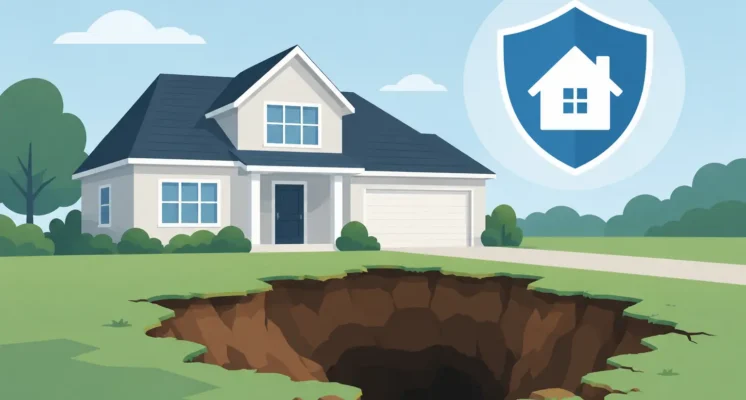
Does Homeowners Cover Sinkholes? What to Know
A crack across a tile floor, a new dip in the yard, or a door that suddenly will not close can make any Florida homeowner wonder: does homeowners cover sinkholes? The honest answer is that it depends on the cause of the damage, the wording of your policy, and whether you purchased specific sinkhole coverage.
For Naples-area homeowners, this is more than an insurance question. It is a property-protection question. Florida’s limestone geology, heavy rain, changing water levels, and development patterns can all contribute to ground movement. Yet not every depression in the lawn is a sinkhole, and not every ground-related loss triggers the same protection.
Does homeowners cover sinkholes in Florida?
A standard Florida homeowners policy generally provides limited protection for a specific event called a catastrophic ground cover collapse. That is not the same thing as broad sinkhole coverage.
For a loss to qualify as a catastrophic ground cover collapse, it typically must involve geological activity that causes the ground cover to collapse suddenly, creates a visible depression in the ground, causes structural damage to the covered building, and leads the building to be condemned and ordered to be vacated by the appropriate government agency. Those requirements are narrow, which means many troubling signs of settlement or ground movement will not meet the definition.
Broader sinkhole loss coverage is usually an optional coverage that homeowners can add for an additional premium. Florida insurers are generally required to make sinkhole coverage available, but homeowners must review the option and choose whether it belongs in their policy. Coverage, deductibles, limits, and testing provisions vary by carrier.
That distinction matters. A home may show cracking, settling, or foundation movement connected to sinkhole activity without suffering a sudden, catastrophic collapse. In that situation, the homeowner may need the separate sinkhole endorsement for the claim to be considered.
Sinkhole coverage versus ground cover collapse
The terminology can feel technical, but the practical difference is significant.
Catastrophic ground cover collapse is a built-in, tightly defined protection within many Florida homeowners policies. It is intended for an extreme event where the structural damage is so severe that authorities condemn the home. It is not designed to address every early warning sign of subsidence or every instance of foundation damage.
Sinkhole loss coverage is broader. Depending on the policy, it may respond when verified sinkhole activity causes damage to the structure, even if the property has not been condemned. Carriers often require professional testing to confirm that sinkhole activity caused the damage. They may also require a repair plan that addresses both the structure and the underlying ground conditions.
A policy can also exclude damage caused by settling, cracking, shrinking, bulging, or expansion when those conditions occur without verified sinkhole activity. Normal wear, construction defects, poor drainage, erosion, and plumbing leaks can create similar symptoms, but they may be handled very differently under an insurance policy.
What homeowners insurance may pay for
When a covered sinkhole loss occurs, the policy may help pay to repair the insured dwelling and, in some cases, other covered structures. The exact scope depends on the policy form and endorsement. The insurer will usually investigate the claim, often with engineers or geological professionals, before determining whether the damage is covered and what repairs are necessary.
Coverage may include stabilization work, foundation repair, structural repair, and damage to parts of the home affected by the verified loss. Personal property, detached structures, landscaping, pools, patios, and driveways may be subject to separate limits, exclusions, or coverage requirements. A cracked pool deck, for example, does not automatically mean the full repair is covered simply because sinkhole activity is suspected nearby.
Additional living expense coverage may also be relevant if a covered loss makes the home uninhabitable. Still, homeowners should not assume temporary housing is included for every investigation period or every repair situation. The policy language and the facts of the loss control the outcome.
What is commonly not covered
Homeowners insurance is not a maintenance plan for every movement in the soil. A carrier may deny or limit a claim when the damage results from issues such as gradual settlement, poor construction, soil compaction, water intrusion, drainage failures, or deferred maintenance rather than a covered sinkhole loss.
Flood damage is another frequent point of confusion. Heavy rainfall can worsen erosion or reveal a ground problem, but homeowners insurance generally does not cover flooding. A separate flood policy addresses flood damage, while sinkhole coverage addresses qualifying damage from verified sinkhole activity. The same storm can create multiple types of loss, and each may fall under a different policy or exclusion.
It is also possible to have a sinkhole-related concern with no covered structural damage. If an engineer identifies sinkhole activity but the home has not sustained covered damage, the policy may not pay for preventive work. This is one reason a careful review before a problem arises is far more valuable than trying to decode coverage after a crack appears.
What to do if you suspect sinkhole activity
Do not fill a depression, begin major repairs, or hire a contractor to alter the site before documenting what you see, unless immediate action is needed to protect people from harm. Take dated photos and videos of cracks, exterior walls, floors, doors, windows, pavement, and any changes in the yard. Keep notes about when you first noticed the condition and whether it is changing.
Next, report the concern to your insurance carrier or agency promptly. An insurer may arrange an inspection and determine whether testing is appropriate. Be precise when describing the issue, but avoid diagnosing the cause yourself. Words like “sinkhole” can describe a homeowner’s concern, while the policy response may depend on an engineering finding.
If there is an immediate hazard, keep people and pets away from the affected area and contact local authorities or qualified professionals as appropriate. Safety comes before documentation. Once the site is secure, preserve records of any emergency measures, inspections, repair estimates, and communications.
Questions worth asking during a policy review
For a high-value home, a policy review should go beyond checking the premium. Sinkhole protection should be considered alongside flood exposure, hurricane deductibles, water backup coverage, ordinance or law limits, and the cost to rebuild to current standards.
Ask whether your current policy includes only catastrophic ground cover collapse or whether you carry optional sinkhole loss coverage. Confirm the sinkhole deductible, whether the deductible is a flat dollar amount or percentage, and how the policy treats foundation stabilization, detached structures, and additional living expenses.
It is also wise to ask how a claim investigation works. Knowing who will coordinate the carrier, what documentation may be needed, and how testing decisions are made can reduce uncertainty when an already stressful situation develops.
For many homeowners in Southwest Florida, the right answer will depend on the home’s location, construction, age, value, prior inspection findings, and comfort with out-of-pocket risk. Optional coverage adds cost, but going without it can leave a major gap if a verified sinkhole damages the structure without meeting the strict threshold for a catastrophic collapse.
A thoughtful conversation with a local insurance advisor can bring this exposure into focus before the ground shifts. At Galt Insurance, the goal is not simply to place a policy, but to help families understand how their home, flood, excess, and specialty coverages work together to protect what matters most.