


Insurance Insights
Perspectives on protecting your home, business and everything you value.

How to Build a Business Hurricane Recovery Kit
Last Updated: November 27, 2026
Quick Summary
A business hurricane recovery kit is a stocked, organized set of food, water, lighting, communications, documents and tools that lets your team stay safe and your operations resume quickly after a storm. Store it in waterproof containers in a location that stays dry during flooding.
- Plan for at least one gallon of drinking water per person per day for three days.
- Keep flashlights, batteries and a battery-powered or weather radio for updates when internet is down.
- Store physical and cloud copies of insurance policies, records, site maps and key contacts.
- Size the kit to your largest expected shift, plus a 10 to 20 percent buffer.
- Review supplies every six months and rotate food and water before they expire.
Table of Contents
- What to Include in a Business Hurricane Recovery Kit
- Food, Water and Basic Supplies for Staff
- Hurricane Supplies for Businesses: Power, Lighting and Communications
- Business Disaster Recovery Kit Checklist: Records, Insurance and IT Backups
- 72-Hour Emergency Kit Checklist and Kit Quantities by Headcount
- Business Continuity Plan After a Hurricane: Reopening and Damage Documentation
- Maintaining Your Kit and Scheduling Your Next Step With Galt Insurance
- Frequently Asked Questions
Every Florida business should have a hurricane recovery kit ready before storm season starts, and the right kit can keep a business running when power, phones and roads go down. A recovery kit is a stocked, organized set of food, water, lighting, communications, documents and tools that lets your team stay safe and your operations resume quickly. We’ve put together this practical guide to help you build one.
Most small businesses in Florida plan for the storm itself but forget about what comes after. The hours and days following a hurricane are when your staff needs supplies, when your records matter most and when your insurance claim begins. A good kit covers all three. Think of it as the bridge between the storm and getting back to work.
What to Include in a Business Hurricane Recovery Kit
Start by listing the core categories your business needs to cover. A solid kit usually includes supplies for people, power, communications, records and building protection. Each category should have a named owner who checks it on a set schedule.
Focus on the things your team will need in the first 72 hours, when outside help may be slow to arrive. Keep the list short enough to stock fully, then expand it as your budget allows. Store everything in clearly labeled, waterproof containers in a location that stays dry during flooding.
- Emergency food and drinking water for every staff member
- First-aid supplies and any prescription medications staff may need
- Flashlights, headlamps and battery-powered lanterns
- Batteries, backup power and a battery-powered or weather radio
- Printed contact lists and a way to reach staff without a phone network
- Copies of insurance policies, important records and site maps
Food, Water and Basic Supplies for Staff
Plan for at least one gallon of drinking water per person per day for three days. Many businesses find that keeping extra water on hand for cleaning and sanitation is also helpful. Choose shelf-stable foods that need no cooking, such as canned goods, crackers, nut butters and shelf-stable juice boxes.
Basic supplies matter as much as food. Stock blankets, a small first-aid manual and simple hygiene items like hand sanitizer, wipes and trash bags. If your building has a break room with a cooler, a few sealed bins of ice packs can keep medications and perishable items safe.
Review your food and water supply every six months. Rotate items before they expire, and note the dates on a checklist taped inside the storage bin. A common mistake is storing a large quantity once and then forgetting about it until it spoils. Keeping the checklist current also helps you compare your business supplies with items for emergency kits at home, so gaps are easier to spot before the next storm.
Hurricane Supplies for Businesses: Power, Lighting and Communications
Power is often the first thing to fail and the last to return. Keep a supply of flashlights and extra batteries sized for each device, and store them away from the rest of the kit so you can reach them in the dark. Battery-powered lanterns give off more even light across a room than a single flashlight.
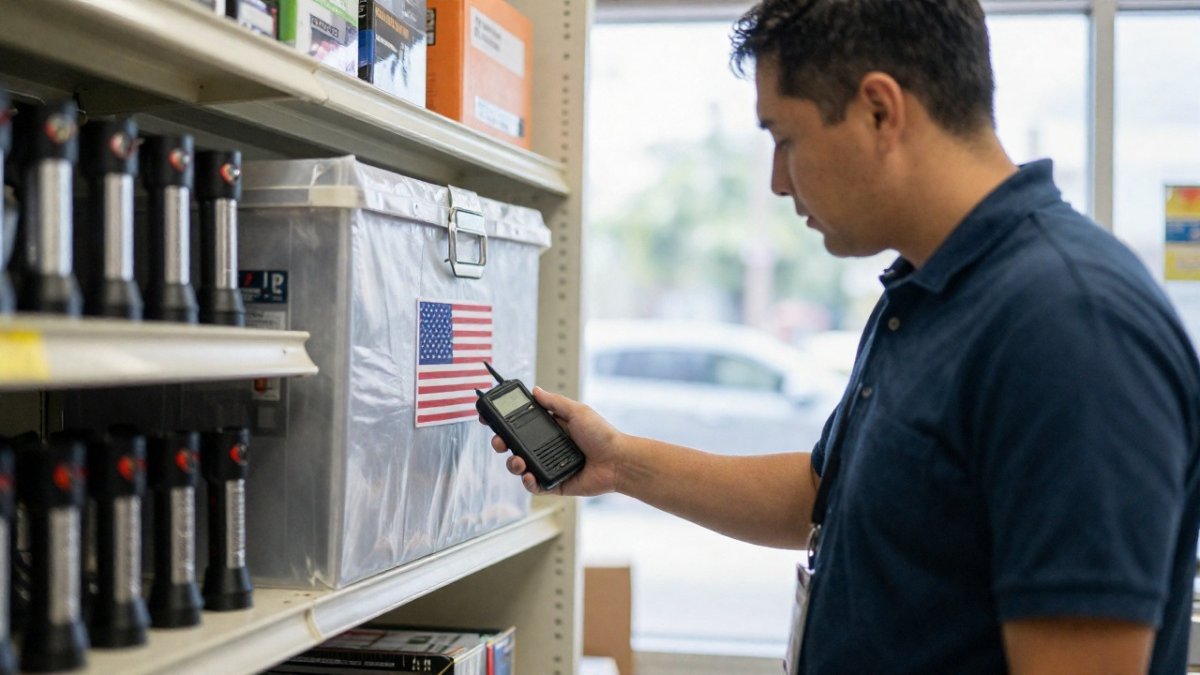
Communication plans matter just as much. Cell towers can overload or go offline, so a battery-powered weather radio gives your team storm updates even when internet service is down. Include a few inexpensive two-way radios if your team needs to coordinate across a large site or multiple buildings.
For backup power, decide what must stay running. Many businesses limit backup power to refrigeration, a few outlets and internet equipment. Keep a power converter and fuel only if you have a generator that is properly installed and maintained. Never run a generator indoors.
Business Disaster Recovery Kit Checklist: Records, Insurance and IT Backups
Records are the part of the kit most businesses overlook. Keep physical copies of insurance policies, property deeds or leases, site maps, building plans and key vendor contacts in a waterproof container. Store a digital copy in a secure cloud location that staff can reach from any device.
Insurance records deserve special attention. Before storm season, photograph or video your property, equipment and inventory. Save those files somewhere outside the building. Use a property claims documentation guide to record losses properly. After a loss, this documentation makes the claims process faster. Learn how to file a hurricane claim without delays if you need to start one.
IT recovery is the final piece. Back up critical data to an off-site or cloud service at least once a week. Keep a list of software licensing keys, operating-system installation media and the login details for your key systems. Store this list offline, since you may not be able to access it through the network you are trying to restore.
- Insurance policy numbers, agent contacts and claim hotline numbers
- Employee emergency contact list, including home and out-of-area numbers
- Vendor and utility account numbers for shutoff and restart
- Current inventory list with photos
- Cloud backup login and recovery instructions
72-Hour Emergency Kit Checklist and Kit Quantities by Headcount
Size your kit to the people who will actually be on site during and immediately after a storm, not to total payroll. A 10-person professional office, a 60-person warehouse with two shifts, and a retail store with a small closing crew need very different quantities.
The table below gives a practical starting point. Adjust for employees with medical needs, employees who may shelter onsite overnight, and any site that stores perishable inventory or critical equipment.
| Item | Quantity per Person (72 hours) | 10-Person Office | 60-Person Warehouse (largest shift) |
|---|---|---|---|
| Drinking water | 3 gallons (1 gallon per day) | 30 gallons | 180 gallons |
| Shelf-stable food | 3 days of meals | 30 meals | 180 meals |
| Flashlights or headlamps | 1 per 2 people | 5 units | 30 units |
| Extra batteries | 2 sets per device | Matched to devices | Matched to devices |
| First-aid kit | 1 per 10 people | 1 kit | 6 kits |
| Blankets | 1 per person | 10 blankets | 60 blankets |
| Battery-powered or weather radio | 1 per site plus 1 per 25 people | 1 radio | 3 radios |
| Two-way radios | 1 per 5 people coordinating | 2 radios | 12 radios |
| Sanitation kits (wipes, trash bags, hand sanitizer) | 1 kit per 20 people | 1 kit | 3 kits |
| Work gloves and safety glasses | 1 set per person likely to clear debris | 4 sets | 30 sets |
Scale by site type rather than treating every location the same. An office kit can lean on stored water, shelf-stable food, lighting, and records; a warehouse kit needs more water, more lighting for aisles and loading docks, work gloves, and a larger first-aid supply because employees may be clearing debris or securing inventory.
Watch out: sizing to total headcount rather than the largest expected shift is the most common error. It either overstocks a small office or leaves a warehouse short on water and lighting when a full shift shelters onsite.
Keep a printed checklist inside each storage container with the date, quantity, and owner noted. Review quantities each quarter, before hurricane season, and any time headcount or shift schedules change by more than 10 percent. Replace anything used, expired, or damaged immediately so the kit is always at full strength.
Business Continuity Plan After a Hurricane: Reopening and Damage Documentation
A recovery kit works best as part of a written business continuity plan. Your plan should name who makes the call to close or reopen, how staff will be notified and which functions must resume first. Share the plan with employees and practice it at least once a year.
After the storm passes, document damage before you clean anything up. Take wide shots of each area and close-ups of specific losses. Record serial numbers for equipment and keep receipts for emergency repairs.
If you carry business interruption coverage, understand what it pays for and how long it lasts. Talk with your insurer early about how to track lost revenue during closure.
Maintaining Your Kit and Scheduling Your Next Step With Galt Insurance
A kit that sits untouched for years will fail when you need it most. The businesses that recover fastest treat the kit as an inventory system with a named owner, a written schedule, and a simple record of what was checked and when.
Set a maintenance calendar with four touchpoints. Two weeks before hurricane season, do a full inventory: count every item against the checklist, test flashlights, radios, and battery packs, check expiration dates on food, water, and medications, and confirm that records and contact lists are current. Mid-season, do a quick visual check and replace anything used. At the end of hurricane season, rotate food and water, clean and dry containers, and note any items that failed. In the spring, update employee contact lists, insurance policy numbers, vendor contacts, and cloud backup credentials, since these change more often than supplies do.
Use a simple inventory log taped inside each container. Record the item, quantity, expiration date, date checked, and initials of the person who checked it. A common pattern is to color-code by quarter so a glance shows whether the last check actually happened.
Watch out: storing the kit in a basement, closet, or shed that floods is a frequent failure. Keep containers on shelving at least a foot off the floor and away from exterior walls, and confirm the storage area stays dry during heavy rain.
Tie kit maintenance to your broader business continuity plan. Name who makes the call to close or reopen, how staff will be notified, and which functions must resume first.
Storm season is also a good time to review your coverage, since the details of commercial property policies matter. Explore commercial property insurance hurricane damage coverage, including wind, flood and deductibles.
If you are ready to act, Galt Insurance manages personal and professional insurance in one dedicated experience. For current pricing or a quote, visit the Galt Insurance website.
Frequently Asked Questions
What should a business include in a hurricane recovery kit?
A business hurricane recovery kit should cover water, non-perishable food, first-aid supplies, flashlights and batteries, a battery-powered or weather radio, copies of key business records, insurance policy contacts, and phone numbers for staff and vendors. Scale quantities to the number of employees and the number of days you expect to operate without outside help. Store the kit in a dry, accessible location that managers know how to reach even if the building is damaged. Review contents each hurricane season, replace expired food and water, and test batteries and flashlights so the kit is ready when a storm is forecast.
How long should a business emergency supply kit last?
Plan for at least 72 hours of self-sufficiency, which is the common benchmark used in emergency planning for families and businesses. Many businesses extend this to several days or longer if their location is prone to extended power outages or road closures. Keep water at roughly one gallon per person per day, and rotate perishable items before they expire. Build the kit around your staffing levels and the realistic time it would take for outside help or utilities to return.
How can a business protect important records before a hurricane?
Keep digital copies of insurance policies, property records, site maps, payroll data, vendor contracts and IT license keys in a secure cloud location that is accessible from any device. Store physical copies of critical documents in a waterproof, sealed container inside the kit. Confirm that backups run on a schedule and test restoring a file before storm season. Share a list of where records are stored with at least two managers so access is not lost if one person is unavailable.
What supplies does a business need after a hurricane?
After a hurricane, a business typically needs drinking water, shelf-stable food, first-aid supplies, flashlights and batteries, tarps and plywood for temporary protection, cleaning supplies, and a way to communicate with staff. Document damage with photos and video before cleanup begins so insurance claims can be processed. Pricing for supplies varies with quantity, timing and store availability, so check current prices with your suppliers.
