


Insurance Insights
Perspectives on protecting your home, business and everything you value.
How Do You Prep a Naples Home for Hurricane Season?
Last Updated: October 25, 2026
Quick Summary
Preparing a home for hurricane season in Naples starts with knowing your evacuation zone and building a month-by-month timeline, since the season runs June 1 through November 30. Check your zone, review insurance, and order supplies in May, then install shutters, trim trees, and secure your yard before peak risk in August and September.
- Collier County evacuation zones are lettered A through E, and Zone A is the lowest-lying and first called.
- Cut 5/8-inch plywood panels for window backup and label each by room.
- Stock two weeks of basics, including one gallon of water per person per day.
- Run portable generators outdoors only, never in a garage even with the door open.
- Shut off the water at the main valve before leaving a seasonal home empty.
Table of Contents
- Start With a Hurricane Season Timeline and Evacuation Zone Check
- How to Protect Windows From Hurricanes With Shutters and Plywood
- Reinforce Roofs, Garage Doors, and Exterior Doors
- Secure Outdoor Furniture, Grills, and Trim Trees and Shrubs
- Build a Hurricane Supplies Checklist for Homeowners
- Complete a Hurricane Home Inventory Checklist and Review Your Insurance
- Prep a Seasonal or Vacant Property Before You Leave
- Get Your Naples Home Coverage Reviewed Before June
- Frequently Asked Questions
Start With a Hurricane Season Timeline and Evacuation Zone Check
Preparing a home for hurricane season in Naples starts with two things: knowing your evacuation zone and building a month-by-month timeline. The season runs June 1 through November 30, and the work should be finished before the first storm forms.
Here is the short version of how to prepare your home for hurricane season in Naples:
- May: Check your evacuation zone, review insurance, and order supplies.
- June-July: Install shutters or cut plywood panels. Trim trees.
- August-September: Peak risk. Keep supplies stocked and the yard clear.
- October-November: Stay ready. Late-season storms still hit Southwest Florida.
Know Your Evacuation Zone and Storm Surge Risk
Evacuation zones in Collier County are lettered A through E, and Zone A is the lowest-lying and first to be called. Storm surge, not wind, drives most evacuation orders here.
Flood risk is separate from evacuation zones. Use this Florida flood zone guide to understand FEMA maps, insurance requirements, coastal risk, and the coverage choices that help protect your property.
A Timed Prep Calendar From June Through November
A written calendar beats good intentions. Many Naples homeowners find that spreading prep across four weekends is easier than cramming it into one.
| When | Task | Why It Matters |
|---|---|---|
| May | Check evacuation zone, order supplies, review policy | Beats storm-week shortages |
| Early June | Install shutters, test generator | Confirms everything fits and runs |
| July | Trim trees, clean gutters | Removes flying debris sources |
| August | Re-check supplies, photograph inventory | Peak season readiness |
| October | Restock and re-inspect | Late-season storms still form |
How to Protect Windows From Hurricanes With Shutters and Plywood
Window protection is the highest-value prep step for most Naples homes. Flying debris breaks glass, and once wind enters, pressure can lift the roof. Hurricane shutters or impact windows are the best options.
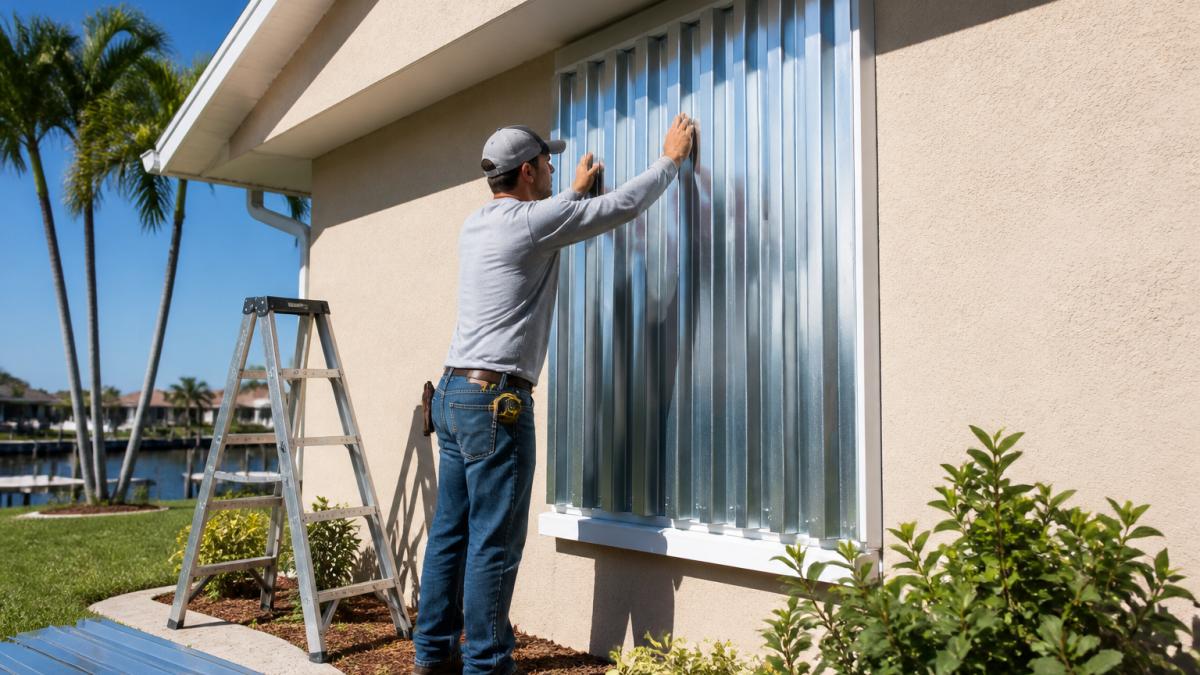
Follow these steps:
- Measure every window and door opening now, not during a watch.
- Choose accordion, roll-down, or panel shutters, or confirm impact windows.
- Cut 5/8-inch plywood panels for backup and label each by room.
- Store anchors, bolts, and panels together in the garage.
- Install shutters once as a practice run before June.
Watch out: drilling anchor holes for the first time during a storm warning wastes hours you may not have.
Reinforce Roofs, Garage Doors, and Exterior Doors
Roof and door reinforcement keeps wind from getting inside. The roof is the most common failure point in a hurricane, and garage doors are the weakest large opening on most homes.
Start with these upgrades:
- Have a roofer check roof straps and deck attachments.
- Add a hurricane-rated garage door brace kit.
- Install code-approved hinges and deadbolts on exterior doors.
- Seal gaps around doors and windows to cut water intrusion.
Roof Straps, Gutters, and Downspouts
Roof straps tie the roof to the walls and reduce the chance of lift-off. Gutters and downspouts matter too: clogged gutters send rainwater into the walls and soffits. Clear rain gutters and check that downspouts carry water away from the foundation. Home resiliency upgrades like these often lower wind damage risk.
Secure Outdoor Furniture, Grills, and Trim Trees and Shrubs
Anything loose in the yard becomes a projectile, and in a coastal neighborhood the yard holds more loose items than most homeowners realize. Outdoor furniture, patio furniture, grills, and outdoor kitchens should come indoors or be anchored before landfall.
Do this before every storm:
- Bring indoors: chairs, tables, umbrellas, décor, pool toys, and loose tools.
- Anchor or store: grills, propane tanks, outdoor kitchen items, and heavy planters.
- Trim trees and shrubs, and remove dead trees and weak tree limbs.
- Clear rain gutters and downspouts one more time.
- Tie down or store trash and recycling bins; empty them if pickup is delayed.
Pruning matters more than people think. Dead branches are the classic source of flying debris, and a limb that looks harmless in calm weather can punch through a screen panel or skylight.
Lanai, Pool Cage, and Screen Enclosure Prep
A screened lanai or pool cage is one of the most vulnerable structures on a coastal property, and it is the item most out-of-town owners forget. Before a storm:
- Remove or secure screen panels that are already loose; a torn screen becomes a sail.
- Bring lanai furniture, rugs, and decor inside the house, not just against the wall.
- Shut off and cover pool equipment, and store pool chemicals in a dry, elevated spot.
- Lower the pool water level only if your equipment and local guidance call for it; do not drain a pool.
- Photograph the lanai and pool area before the storm so any screen or cage damage is easy to document later.
Screen cages and aluminum frames often fail before the roof does, so treat the lanai as a first-priority zone, not an afterthought.
Vegetation That Survives Coastal Wind
Not every plant is a liability. Native and salt-tolerant species with flexible branches tend to shed less debris than brittle ornamentals. If you are replanting, favor wind-resistant species and keep large trees away from the house, driveway, and utility lines. Remove dead or dying trees entirely rather than waiting for them to come down on their own. A little pruning discipline each spring pays off every season.
Build a Hurricane Supplies Checklist for Homeowners
A hurricane supplies checklist for homeowners should cover two weeks of basics. Stores empty fast once a watch is issued, so buy in May and restock in October.
Your kit needs:
- Water: one gallon per person per day
- Non-perishable food and a manual can opener
- Batteries, flashlights, and a battery radio
- Prescription medications and a first-aid kit
- Phone chargers and backup power banks
Generator and Fuel Safety During a Power Outage
Backup power keeps a fridge and medical devices running, but generators cause real harm when misused. Run portable generators outdoors only, well away from windows and doors. Never run one in a garage, even with the door open. Store fuel in approved containers, and let the generator cool before refueling.
Complete a Hurricane Home Inventory Checklist and Review Your Insurance
A hurricane home inventory checklist is a room-by-room record of your belongings, and it is the difference between a smooth claim and a fight. Walk each room, photograph or video everything, and note makes, models, and serial numbers. Store the file in the cloud.
Then review insurance coverage. Standard homeowners insurance does not cover flood, and wind coverage, deductibles, and valuables limits all vary.
Home Hurricane Insurance Review Before the Storm
Schedule your review before June. Confirm four things: wind coverage, flood coverage, your hurricane deductible, and how valuables are scheduled. This hurricane insurance coverage checklist covers wind, flood, deductibles, valuables, and claim steps. Timing matters too, so check when flood insurance starts to avoid missing a waiting period. Understand how hurricane deductibles affect claims before you need them.
Prep a Seasonal or Vacant Property Before You Leave
A vacant home needs more prep, not less. When no one is there to close shutters, move furniture, or call a plumber after the storm, the preparation has to be done in advance and documented. This is the part of hurricane prep that most guides skip, and it is the part seasonal owners in coastal neighborhoods need most.
Shutoffs, Utilities, and Humidity Control
Before you leave for the season:
- Shut off the water at the main valve to limit damage from a broken line or failed supply hose.
- Turn off the water heater if the home will be empty for an extended period.
- Unplug electronics and small appliances to protect against surges when power returns.
- Set the thermostat to a moderate setting that controls humidity without running the system hard; in a closed house, humidity is what feeds mold.
- Leave interior doors open so air can circulate, and consider a dehumidifier with a drain line if the home is tightly sealed.
Shutters, Furniture, and the Lanai
Install shutters fully before you leave rather than relying on a neighbor to do it during a watch. Move furniture and rugs off the floor and away from windows, clear the lanai, and store loose items inside. Photograph every room and the exterior before you lock up; that record is the baseline for any claim.
Monitoring and Local Contacts
Arrange for someone local to check the property after the storm and to walk it before the season starts. Give that person keys or access instructions, your insurer’s claim number, and a way to reach you. Forward mail or pause delivery so a full mailbox does not advertise an empty house. Confirm your insurer has a current phone number and email for you, and check whether your policy has any vacancy or unoccupancy conditions that apply to a home left empty for part of the year.
Post-Storm Inspection From a Distance
After a storm passes, ask your local contact to photograph the exterior, the lanai, and any visible interior damage before repairs begin. Document everything, keep receipts for emergency work like tarping or water extraction, and contact your insurer promptly. If you cannot get to the property, a documented inspection by a trusted contact is the next best thing, and it protects the claim while you arrange travel.
Get Your Naples Home Coverage Reviewed Before June
The hardest part of hurricane prep is starting early, when the sky is clear and nothing feels urgent. That is exactly when a coverage review pays off. Galt Insurance builds tailored policies for coastal homeowners, manages your entire personal insurance profile in one place, and gives you a dedicated team for a unified experience. Explore coastal home insurance for Florida homeowners, then get started with Galt Insurance.
Frequently Asked Questions
When should I put up hurricane shutters before a storm?
Install shutters or plywood panels as soon as a hurricane watch is issued for your area, which is typically 48 hours before tropical-storm-force winds arrive. Winds can reach the coast well ahead of the storm’s center, so waiting until the warning is issued often means working in rising wind and rain. Test-fit your shutters and label the panels for each window in May, before hurricane season peaks, so installation takes minutes instead of hours.
What should a hurricane supplies checklist for homeowners include?
Plan for at least seven days of water (one gallon per person per day), non-perishable food, manual can openers, batteries, flashlights, a battery-powered or hand-crank weather radio, a first-aid kit, prescription medications, phone chargers and power banks, cash, and important documents in a waterproof container. Add tarps, plywood, work gloves, and a fire extinguisher. Keep the kit in one accessible spot and check expiration dates each May before hurricane season begins.
Will my homeowners insurance cover hurricane damage in Naples?
Most Florida homeowners policies cover wind damage from hurricanes, but coverage usually carries a separate hurricane deductible, often 2% to 5% of the dwelling’s insured value. Flood damage from storm surge is excluded from standard homeowners policies and requires a separate flood policy, which typically has a 30-day waiting period. Review your declarations page each spring and confirm your dwelling limit reflects current rebuild costs before hurricane season starts.
How do I document my home and belongings before a storm?
Walk through every room and record a video narration describing each item, then photograph serial numbers on electronics and appliances. Store receipts for major purchases in a cloud folder or waterproof safe. Keep a written hurricane home inventory checklist with estimated values, and email a copy to yourself so it survives a damaged computer. This record speeds up claims and supports your home hurricane insurance review each year.
