


Is Commercial Auto Insurance for Landscapers Worth It?
Table of Contents
- Why Landscapers Need Commercial Auto Coverage
- What Commercial Auto Insurance Covers for Landscaping Businesses
- Hired and Non-Owned Auto Insurance: The Coverage Gap Most Landscapers Miss
- Commercial Auto Insurance Cost for Small Business Landscapers
- Landscaping Business Insurance Requirements: What You Actually Need
- Personal vs. Commercial Auto Insurance: Key Differences
- How to Get a Commercial Auto Insurance Quote
- The Verdict: Is Commercial Auto Insurance Worth It for Landscapers?
- Frequently Asked Questions
Last Updated: September 25, 2026
Why Landscapers Need Commercial Auto Coverage
If you’re weighing whether commercial auto insurance for landscapers is worth it, the short answer is yes: a personal auto policy typically excludes business use, so your truck, trailer, and equipment may not be covered during paid jobs. Commercial auto insurance for landscapers is a business auto policy built for landscaping vehicles, covering liability, physical damage, and the risks of hauling equipment and crews.
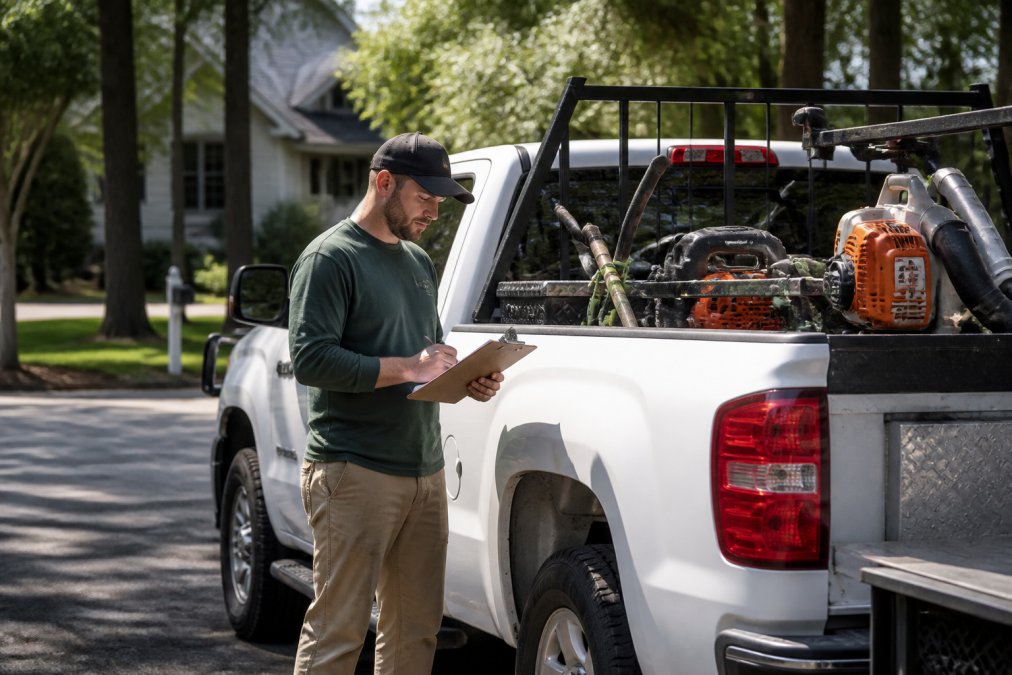
The Personal Auto Policy Problem
A personal auto policy is written for commuting and errands, not commercial work. When you use a personal vehicle for business, the insurer can deny a claim based on the business use exclusion, leaving you to cover repairs, liability, and legal defense yourself.
Filing a business-related claim on a personal policy can result in denial and, in some cases, policy cancellation for misrepresentation. That can make future coverage harder and more expensive to obtain.
What Commercial Auto Insurance Covers for Landscaping Businesses
Commercial auto insurance for landscaping businesses covers the vehicles you own or lease, the drivers you employ, and liability from operating on customer property. It typically includes liability, collision, and comprehensive protection, plus add-ons like hired and non-owned auto coverage.
The main coverage types break down like this:
- Liability coverage pays for bodily injury and property damage you cause to others
- Collision coverage pays for damage to your own vehicle in an accident
- Comprehensive coverage pays for theft, weather, vandalism, and similar non-collision losses
- Uninsured motorist coverage protects you when the at-fault driver has no insurance
- Towing and labor covers roadside breakdowns, common with older work trucks
Liability, Collision, and Comprehensive Protection
Liability coverage handles claims others file against you, if your mower throws a rock through a customer’s window, liability responds. Collision and comprehensive handle your own vehicle, and comprehensive matters most for theft, a real risk for trucks parked overnight with equipment inside.
Hired and Non-Owned Auto Insurance: The Coverage Gap Most Landscapers Miss
Hired and non-owned auto insurance covers vehicles you don’t own: rented trucks, borrowed trailers, and employee-owned vehicles used for business errands. It’s the gap that catches landscapers who assume their commercial auto policy covers every vehicle on a job.
Ask your insurer whether hired and non-owned coverage is bundled or sold separately. Many landscaping packages include it, but it’s easy to overlook when reviewing a policy summary.
Commercial Auto Insurance Cost for Small Business Landscapers
Commercial auto insurance cost for small business landscapers depends on fleet size, driving records, vehicle type, coverage limits, and deductible. Any figure quoted online is an average that may not reflect your operation, the only reliable number comes from a formal quote.
Several factors drive premium costs up or down:
- Number and type of vehicles in your fleet (a $60,000 dump truck costs more to insure than a used half-ton pickup)
- Years of driving experience and accident history for each driver, including motor vehicle records (MVRs)
- Annual mileage and radius of operation (local vs. multi-county routes)
- Value of the vehicles and any permanently attached equipment, such as a mounted sprayer or snow plow
- Deductible you choose (raising it from $500 to $1,000 typically lowers premium, but you absorb more per claim)
- Coverage limits and add-ons selected, including hired and non-owned auto and uninsured motorist
- Business structure and years in operation, since newer businesses without loss history are often rated higher
The Cost Drivers Most Landscapers Overlook
Three cost drivers matter more than most owners realize.
First, driver assignment. Listing a 19-year-old crew member as a primary driver on your most expensive truck can sharply raise your premium. Some carriers let you exclude a driver, which lowers cost but leaves that person uncovered behind the wheel.
Part-Time vs. Full-Time: Why Your Premium Is Not the Same as Your Neighbor’s
If you mow a few lawns on weekends with your personal truck, you’re in a different risk category than a full-time operation running three crews. Part-time landscapers often assume a personal policy is fine because the work is occasional, but any regular business use can trigger the business-use exclusion, frequency doesn’t change that the vehicle serves a business purpose.
Ask your agent to quote two versions: one with a $500 deductible and one with a $1,000 deductible. The premium difference often surprises owners, and it makes the trade-off concrete instead of theoretical.
Landscaping Business Insurance Requirements: What You Actually Need
Landscaping business insurance requirements vary by state, contract, and client. Most states require commercial auto liability for registered business vehicles, and many commercial clients require proof of general liability and workers’ compensation before signing. Minimum liability limits are set at the state level, so check your state’s requirements directly.
The practical checklist for most landscaping operations:
- Commercial auto liability meeting your state’s minimum
- Collision and comprehensive for vehicle protection
- Hired and non-owned auto for borrowed and employee vehicles
- General liability for property damage and bodily injury on job sites
- Inland marine or equipment floater for tools and landscaping equipment
- Workers’ compensation if you employ crew members
The Business-Use Exclusion: The Rule That Decides Most Claims
Here’s the mechanism most guides skip. A standard personal auto policy is rated for personal use and contains a business-use exclusion: the policy doesn’t apply to a vehicle used in a business or occupation, with narrow exceptions like carpooling. Hauling mowers to a customer’s property puts you squarely inside that exclusion.
Financial Responsibility Rules and Why They Matter for Business Vehicles
Every state except New Hampshire has a financial responsibility requirement for registered vehicles, and most require liability insurance at minimum limits. For business vehicles those minimums often match personal ones, but the exposure is different: a commercial truck pulling a trailer full of equipment can cause far more damage than a commuter car, and state minimums are frequently too low for a serious accident.
Equipment in Transit: The Coverage Most Landscapers Get Wrong
Equipment theft isn’t a vehicle accident, and your commercial auto policy won’t cover stolen mowers. Inland marine coverage or a standalone equipment policy handles tools and business assets: if your truck is broken into overnight, commercial auto may cover the window, but not what was taken.
Commercial auto covers the vehicle. Inland marine or equipment coverage protects what’s inside it. Landscapers need both, and treating them as one policy is a common and expensive mistake.
Personal vs. Commercial Auto Insurance: Key Differences
Personal and commercial auto insurance differ in who they cover, what they cover, and how claims are handled. A personal policy is priced for household driving and typically excludes business use; a business auto policy is priced for commercial risk and covers employees, job-site liability, and business vehicle usage.
| Feature | Personal Auto Policy | Commercial Auto Policy |
|---|---|---|
| Business use | Excluded | Covered |
| Employee drivers | Usually not covered | Covered when listed |
| Liability limits | Often lower | Higher options available |
| Equipment inside vehicle | Not covered | Not covered (needs inland marine) |
| Tax treatment | Personal | Often a business deduction |
How to Get a Commercial Auto Insurance Quote
Getting a commercial auto insurance quote takes about 15 to 30 minutes with your vehicle and driver information ready.
What you’ll need before you start:
- Vehicle identification numbers for every truck and trailer
- Driver names, license numbers, and driving records
- Annual mileage estimates for each vehicle
- Coverage limits and deductible you want
- Details on any equipment you haul
Landscaping businesses that want their auto, liability, and equipment coverage managed by one dedicated team instead of multiple carriers.
The Verdict: Is Commercial Auto Insurance Worth It for Landscapers?
For most landscaping businesses, commercial auto insurance is worth it because a single denied claim on a personal policy can cost far more than years of premiums. The business use exclusion decides it: if your vehicle does paid work, your personal policy may not respond when you need it most.
Frequently Asked Questions
What kind of insurance do landscapers need?
Landscapers typically need commercial auto insurance for work vehicles, general liability for property damage and injuries, and workers’ compensation for employee injuries. Many also need inland marine coverage for equipment like mowers and trailers. A business owner’s policy can bundle property and liability coverage. Requirements vary by state and whether you have employees, but most landscaping businesses need at least commercial auto and general liability to operate legally and protect business assets.
Does personal auto insurance cover business-related landscaping accidents?
Personal auto policies almost always exclude business use. If you get into an accident while hauling equipment or driving to a job site, your personal insurer will likely deny the claim. This means you could pay out of pocket for bodily injury, property damage, and legal defense costs. Commercial auto insurance fills this gap and covers your work truck, trailer, and the equipment inside. Even part-time landscapers should not rely on a personal policy for business driving.
How much does commercial auto insurance cost for a small landscaping business?
Commercial auto insurance cost for small business landscapers varies based on fleet size, driving records, vehicle type, and coverage limits. Rates also depend on whether you need hired and non-owned auto insurance for employee-driven vehicles. The best way to get an accurate number is to request a quote from an insurer who understands landscaping risks.
Do I need an LLC to get commercial auto insurance?
You do not need an LLC to buy commercial auto insurance. Sole proprietors and partnerships can get coverage. However, having an LLC separates your personal assets from business liabilities, which can matter if you face a lawsuit after an accident. Insurers may ask for your business structure when quoting, but the main factors are your vehicles, drivers, and coverage needs. An LLC is a legal protection decision, not an insurance requirement.
What happens if I don’t have commercial auto insurance and my employee causes an accident?
Without commercial auto insurance, you could be personally responsible for bodily injury, property damage, and legal defense costs from an accident caused by your employee. Your personal auto policy will not cover business use, and your general liability policy typically excludes auto accidents. This means you could lose business assets, equipment, and even personal savings. Hired and non-owned auto insurance specifically protects you when employees drive rented or personal vehicles for work.
The real challenge isn’t finding the cheapest policy. It’s building one that actually covers your trucks, your crew, and your equipment without gaps. Galt Insurance designs tailored policies for each business, manages your entire insurance profile in one place, and gives you a dedicated team for a unified experience. Get started with Galt Insurance and protect the business you’ve built.