



Insurance Insights
Perspectives on protecting your home, business and everything you value.
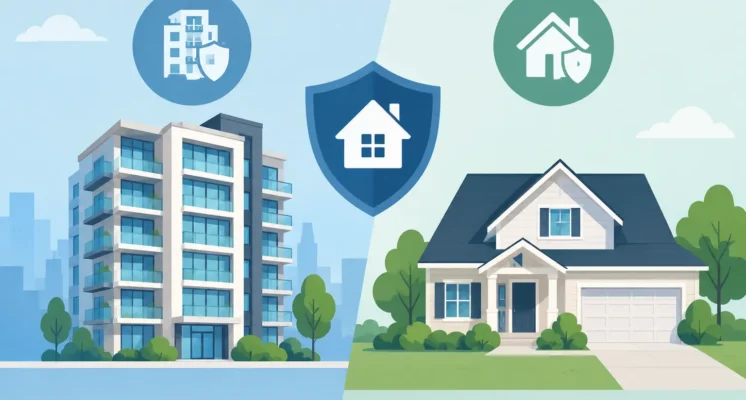
Condo Insurance Versus Homeowners Insurance
A water line breaks in an upstairs unit, a hurricane damages the building roof, or a guest slips in your driveway. The event may look similar whether you live in a condominium or a single-family home, but who insures what can be very different. Understanding condo insurance versus homeowners insurance is particularly valuable in Naples and throughout Southwest Florida, where association rules, coastal weather, and high property values can make coverage details matter quickly.
The central question is ownership. A homeowners policy generally protects a home and the structures the homeowner owns. A condo policy is designed around shared ownership, where the condominium association insures parts of the building through a master policy and the unit owner insures their individual interest. The line between those responsibilities is not always as simple as it sounds.
Condo Insurance Versus Homeowners Insurance: The Core Difference
A standard homeowners policy is built for someone who owns the dwelling itself. It can cover the house, attached structures, detached structures such as a garage or fence, personal belongings, personal liability, and additional living expenses if a covered loss makes the home temporarily unlivable.
Condo insurance, often called an HO-6 policy, is built for an owner of a unit within a condominium association. Rather than insuring the entire building, it generally focuses on the portion of the residence the unit owner is responsible for, along with personal property, liability, and certain costs that can arise from association assessments.
That distinction affects the amount of dwelling coverage needed. A homeowner may need enough insurance to rebuild an entire residence at current construction costs. A condo owner may need coverage for interior finishes, fixtures, appliances, cabinets, flooring, improvements, and other property inside the unit, depending on what the association master policy covers.
For a buyer moving from a house into a luxury high-rise or coastal condo, this is one of the most common places to underestimate risk. A smaller physical footprint does not automatically mean a smaller insurance need.
The Master Policy Sets the Starting Point
Every condo insurance conversation should begin with the association’s master policy and governing documents. Those documents help define where the association’s responsibility ends and the unit owner’s begins.
Some associations insure the building on an “all-in” basis. In a broad sense, this may include certain original interior fixtures and finishes. Other associations use a “bare walls” approach, which may leave the unit owner responsible for much more of the interior. Many fall somewhere between those two models, with specific exclusions and deductibles that deserve close review.
For example, imagine a covered water loss damages drywall, custom cabinetry, hardwood flooring, and built-in appliances inside a condo unit. The association policy may respond to part of the building damage, but the unit owner’s policy may be responsible for upgrades, betterments, or property not included in the master policy’s definition of covered building property.
It also matters whether the unit has been renovated. If a prior owner installed premium stone surfaces, custom millwork, designer lighting, or higher-end flooring, the association policy may only recognize the original specifications. Your individual condo policy should reflect what is actually inside the residence today, not what was there when the building first opened.
What a Homeowners Policy Typically Covers
Homeowners insurance combines several important protections in one policy. Exact terms vary by carrier and policy form, but coverage commonly includes the dwelling, other structures, personal property, loss of use, personal liability, and medical payments to others.
Dwelling coverage is the foundation. It is intended to help repair or rebuild the home after a covered event such as fire, wind damage, or certain types of water damage. In Florida, accurate rebuilding estimates are especially important because labor demand, material prices, building code changes, and post-storm conditions can all affect reconstruction costs.
Other structures coverage can apply to items that are not attached to the house, such as a detached garage, fence, shed, or pool house. Personal property coverage helps with belongings, although jewelry, art, collectibles, firearms, and other high-value items may have lower limits unless they are separately scheduled or otherwise endorsed.
Liability coverage follows the homeowner’s legal responsibility for certain injuries or property damage. If someone is injured on the property or the insured accidentally causes damage to another person’s property, liability protection can be a critical part of the policy. Many affluent households also consider umbrella or excess liability coverage to provide an additional layer above home and auto limits.
What a Condo Policy Typically Covers
A condo policy usually includes personal property and personal liability protection similar to a homeowners policy. The difference is its dwelling or building-property coverage, often called Coverage A, which is intended for the unit owner’s insurable interest inside the condo.
That coverage can help pay for covered damage to interior elements the owner is responsible for. Depending on the master policy, that may include drywall, paint, flooring, cabinetry, countertops, plumbing fixtures, electrical fixtures, and permanently installed appliances. The appropriate limit should be based on the association documents and the cost to restore the unit’s finishes at today’s prices.
Loss assessment coverage is another feature condo owners should understand. An association may assess unit owners for a portion of a covered loss, a master-policy deductible, or certain damage to common property. Coverage may apply in defined situations, subject to the policy terms and limits. In a large coastal community, an assessment following a significant event can be substantial, so a minimal limit may not fit the financial profile of the property owner.
Additional living expense coverage can also be meaningful. If a covered loss makes the unit uninhabitable, it may help with temporary housing and certain increased living costs while repairs are completed. For a seasonal resident, this should be considered in light of where the family would stay, how long repairs could take, and whether the residence is used as a primary home or secondary home.
Florida Risks That Require a Separate Conversation
Neither a condo policy nor a homeowners policy should be treated as a complete answer to every property risk. Flood damage is commonly excluded from standard home and condo insurance policies. In coastal Florida, flood exposure deserves its own discussion, even for residences outside a high-risk flood zone.
Windstorm and hurricane coverage can also involve separate deductibles, exclusions, and carrier-specific rules. A policy’s hurricane deductible may be a percentage of the insured value rather than a flat dollar amount. That can create a meaningful out-of-pocket responsibility after a major storm, particularly for a high-value home.
For condo owners, the association’s hurricane deductible can be just as important. If the association has a large deductible and the governing documents permit an assessment to unit owners, individual loss assessment coverage and available policy limits should be reviewed before storm season, not after damage occurs.
Water losses require similar attention. Damage from a sudden, accidental discharge may be treated differently from repeated seepage, maintenance issues, backup of sewers or drains, or water entering from outside. The details of how the loss happened often determine how coverage responds.
Choosing Limits That Reflect the Way You Live
The right policy is not determined solely by a mortgage requirement or the lowest available premium. It should reflect the residence, the association’s obligations, the household’s assets, and the lifestyle the policy is meant to protect.
For a homeowner, that means confirming that the dwelling limit aligns with a credible replacement-cost estimate, not the home’s market value or tax assessment. Market value may include land, location, and demand, while replacement cost focuses on rebuilding the physical structure.
For a condo owner, it means obtaining and reading the association’s insurance certificate, master-policy summary, declaration, bylaws, and any recent notices about deductibles or assessments. It also means documenting upgrades. Photos, invoices, appraisals, and renovation records can make a claim easier to explain when the condition of the unit matters.
Personal property deserves an honest inventory in either type of residence. Fine art, watches, jewelry, wine collections, antiques, golf equipment, and valuable electronics can exceed standard policy sublimits. A separate schedule may offer broader protection for certain items, often with fewer restrictions than unscheduled property coverage.
A Better Way to Review Your Coverage
Insurance works best when it is reviewed as part of the larger picture. A new renovation, property purchase, inheritance, boat acquisition, change in occupancy, or move from a primary residence to a seasonal home can all change what appropriate protection looks like.
At Galt Insurance, that conversation can bring home, condo, flood, auto, boat, and excess liability considerations into one coordinated view. The goal is not to make every policy identical. It is to identify how the policies work together, where responsibilities overlap, and where a costly gap may exist.
Before your next renewal, ask for the documents that define your ownership responsibilities and compare them with the coverage you carry. A clear conversation now can make it far easier to protect the residence, belongings, and peace of mind you have worked hard to build.