



Insurance Insights
Perspectives on protecting your home, business and everything you value.
Florida Commercial Vehicle Insurance: A Delivery Business Guide
Last Updated: October 30, 2026
Quick Summary
A personal auto policy typically excludes vehicles used to carry goods for hire, so a delivery van or pickup running business routes usually needs a commercial vehicle insurance policy. Match the registration and insurance application to how the vehicle actually earns money, and confirm cargo coverage separately because auto policies almost never cover the goods you haul.
- Florida requires PIP and PDL on registered vehicles, but delivery businesses should not treat that as a green light.
- Interstate for-hire operations may trigger FMCSA insurance filing requirements above Florida’s state floors.
- Cargo insurance covers the goods you haul, and a commercial auto policy almost never does.
- Many cargo policies exclude theft from an unattended vehicle, the scenario that hits delivery fleets hardest.
- Add new drivers promptly, or a claim can be denied because the driver was never listed.
Table of Contents
- Why Delivery Businesses Need Commercial Vehicle Insurance in Florida
- Commercial Vehicle Insurance Requirements in Florida
- Types of Coverage a Delivery Fleet Needs
- Cargo Insurance for Delivery Businesses: Protecting the Goods You Haul
- Commercial Auto Insurance Cost Factors for Delivery Operations
- Small Fleet Commercial Auto Insurance: Coverage for Growing Delivery Teams
- Coverage Gaps, Exclusions, and Post-Accident Steps
- Get a Delivery Vehicle Insurance Quote from Galt Insurance
- Frequently Asked Questions
Why Delivery Businesses Need Commercial Vehicle Insurance in Florida
A personal auto policy typically excludes vehicles used to carry goods for hire, so a delivery van or pickup running business routes usually needs a commercial vehicle insurance policy.
That gap matters more for delivery work than almost any other trade. Your vehicle is the business.
Below, we break down what Florida requires, which coverages protect a delivery operation, where the hidden gaps sit, and how to compare quotes without getting fooled by a low premium.
Commercial Vehicle Insurance Requirements in Florida
Florida does not hand delivery businesses a single checklist. What you must carry depends on three things: how the vehicle is registered and plated, how much it weighs and how it is used, and whether your routes stay in-state or cross a state line. Get any one wrong and you can end up with a policy that looks compliant on paper but denies a claim after a delivery crash.
State Minimums and Why Delivery Vehicles Get Classified Differently
Florida’s financial responsibility law requires every registered vehicle to carry Personal Injury Protection (PIP) and Property Damage Liability (PDL).
The classification question is where delivery businesses get tripped up.
A practical rule: match the registration and the insurance application to how the vehicle actually earns money. If you are unsure which bucket a vehicle falls into, our breakdown of commercial auto versus personal auto coverage walks through use, drivers, liability, and risk.
Weight, Use, and Operating Territory: Three Axes That Change Your Requirements
Delivery fleets are not one risk class. Insurers and regulators separate them along three axes, and each one changes what coverage you need and what it costs:
- Vehicle weight. A light-duty cargo van or pickup sits in a different class than a medium-duty box truck. Heavier vehicles carry higher liability exposure and higher physical damage values, and some carriers will not write them on a standard commercial auto form at all.
- Use. Parcel and package delivery, food and grocery delivery, courier and document runs, and last-mile contract work each carry different exposure. Food delivery adds spoilage and refrigeration risk; parcel delivery adds stop-and-go frequency and unattended-vehicle theft; courier work adds time pressure.
- Operating territory. A local route inside one county is priced and regulated differently from a regional route covering three counties, and both differ from interstate for-hire hauling.
Map every vehicle in your fleet against all three axes before you request quotes. A single policy that lumps a light-duty local van together with a medium-duty regional truck usually prices badly and can leave gaps on the heavier unit.
Federal FMCSA Rules for Interstate and For-Hire Operations
Delivery businesses that cross state lines or haul for hire fall under federal rules on top of Florida’s. The Federal Motor Carrier Safety Administration sets registration, operating authority, and insurance filing requirements for interstate for-hire carriers, and those minimums sit well above Florida’s state floors.
The practical test is not where your business is headquartered but where the vehicle actually operates and whether you carry goods for hire across a state line. For a deeper 2026 breakdown, see our guide to Florida fleet insurance requirements.
Do not assume a Florida-compliant policy satisfies federal filing rules. Interstate for-hire operations can require insurance filings with FMCSA that a standard state-minimum policy does not include. Verify both layers before a vehicle leaves the state.
How to Verify What Applies to Your Operation
Requirements change, and the rules for a one-van food delivery business are not the rules for a regional parcel fleet. Before you bind coverage, confirm three things with the relevant authorities and your carrier: the registration and plate class for each vehicle, the minimum liability and filing requirements for your specific use and territory, and whether any interstate or for-hire authority triggers federal filings.
Types of Coverage a Delivery Fleet Needs
Commercial vehicle insurance for a delivery operation is a stack of separate coverages, and the cheapest quote usually means someone removed a layer.
Commercial auto liability pays for damage and injuries you cause to others.
Physical damage coverage (collision and comprehensive) repairs or replaces your own vehicle after a crash, theft, fire, or storm.
Medical payments coverage pays medical bills for you and your passengers regardless of fault.
Cargo insurance covers the goods in your vehicle, and a commercial auto policy almost never does. Expanding your operations to include larger machinery requires a similar shift in perspective, as heavy equipment transport insurance provides the necessary coverage for high-value assets that standard cargo policies frequently exclude.
| Coverage | What It Pays For | Delivery-Specific Consideration | Watch Out For |
|---|---|---|---|
| Commercial auto liability | Others’ injuries and property damage | High stop frequency on dense routes raises exposure | Does not touch your own van or cargo |
| Physical damage | Your vehicle’s repair or replacement | Upfits and refrigeration add replacement value | Deductible applies per claim; confirm upfit valuation |
| Medical payments | Your drivers’ and passengers’ bills | Drivers in and out of the vehicle constantly | Low limits run out fast |
| Hired auto | Liability on rented vehicles | Peak-season and overflow rentals | Often excluded by default |
| Non-owned auto | Liability on employee-owned cars | Contractor and gig-platform drivers | Does not cover the driver’s own car damage |
| Cargo insurance | The goods you haul | Food, parcel, high-value, and refrigerated loads | Auto policies exclude cargo; unattended theft often excluded |
Matching Coverage to Vehicle Type and Delivery Radius
A light-duty cargo van running a tight local route and a medium-duty box truck covering three counties do not need the same program, even with the same logo. Vehicle type drives physical damage values and, on heavier units, whether a standard commercial auto form even applies. Delivery radius drives liability exposure: longer routes mean more road time and more chances for a serious crash, while dense local routes mean more stops, more pedestrian interaction, and more frequent low-speed claims.
Group vehicles by type and radius before you request quotes, then confirm each group carries liability limits and physical damage deductibles that match its exposure. A single blended policy that treats a local van and a regional truck the same usually prices badly and can leave the heavier unit underinsured.
Platform and Contract Requirements
Many delivery businesses do not set their own coverage bar. Platforms, shippers, and prime contractors often impose insurance requirements: minimum liability limits, additional insured status, certificates of insurance, and sometimes cargo minimums.
Before you sign a delivery contract, read the insurance section and compare it to your policy. If it requires additional insured status or a certificate naming the platform, confirm your carrier will issue it.
Keep a current certificate of insurance on file and update it whenever vehicles or drivers change. Platform vendor reviews often move faster than policy endorsements, and a stale certificate can stall a route before it starts.
Hired and Non-Owned Auto Coverage for Employee and Contractor Drivers
A common mistake is assuming a driver’s personal policy covers business deliveries.
Neither repairs the driver’s personal vehicle, which is why we tell delivery operators to confirm every driver carries their own coverage before the first route.
Cargo Insurance for Delivery Businesses: Protecting the Goods You Haul
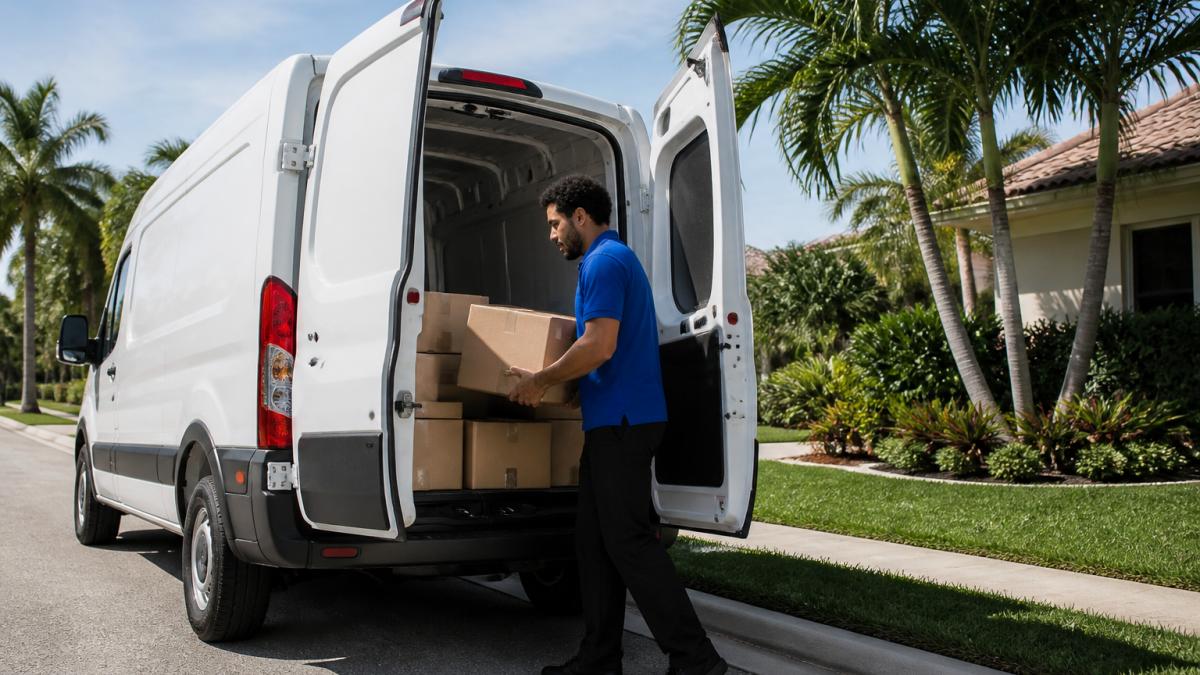
Cargo insurance covers the goods in your vehicle, and a commercial auto policy almost never does. Your auto liability covers the other driver’s car. It says nothing about the seafood, medical supplies, or electronics sitting in your cargo bay.
For food and last-mile delivery, the exposure is real. A refrigerated load spoils after a breakdown. A parcel gets crushed in a rear-end collision. A high-value electronics run gets stolen from an unsecured van overnight.
Commercial Auto Insurance Cost Factors for Delivery Operations
Premiums for delivery fleets are driven by variables you can influence: vehicle use, annual mileage, operating radius, vehicle value, driver history, and claims history. A local florist running short residential routes prices very differently from a regional parcel hauler covering three counties.
The factors that move your premium most:
- Driving records of every listed driver, including contractors
- Vehicle type and value, a new cargo van costs more to repair than an older pickup
- Radius of operation, longer routes mean more time on the road
One practical move: get quotes for all your vehicles at once rather than one at a time. Bundling a small fleet into a single policy can be worth comparing against scattered individual policies, and our guide on how to get quotes for multiple commercial vehicles shows how to structure that request so carriers return comparable numbers.
Small Fleet Commercial Auto Insurance: Coverage for Growing Delivery Teams
Small fleet commercial auto insurance is where a delivery business stops being one van and a phone and starts needing a real policy structure.
Growth creates specific problems. New drivers must be added promptly, or a claim gets denied because the driver was never listed.
This is where a single, coordinated policy beats piecing coverage together. Our commercial fleet insurance for growing delivery teams page explains how vehicles, drivers, limits, and local guidance fit together before a loss happens.
Coverage Gaps, Exclusions, and Post-Accident Steps
The exclusions are where delivery businesses get hurt, and they rarely appear in the headline quote. Personal auto policies routinely exclude business use and delivery for hire, so a driver who “has insurance” may have no coverage at all for your route. Other common gaps: unattended vehicle theft on cargo policies, drivers added after a loss, and rented vehicles with no hired auto endorsement.
If a crash happens, the steps you take in the first hour shape the claim:
- Call emergency services and report the accident
- Photograph all vehicles, damage, and the scene before anything moves
- Collect the other driver’s license, registration, and insurance details
- Note witnesses and their contact information
- Notify your insurer promptly and report exactly what happened
- Preserve delivery records and cargo documentation for any goods claim
Documentation is the difference between a paid claim and a fight.
Get a Delivery Vehicle Insurance Quote from Galt Insurance
The hardest part of insuring a delivery operation is not finding a policy.
At Galt Insurance, we manage your entire insurance profile in one place, with a dedicated team and policies customized to your specific needs.
When you are ready to review options and start a quote, review your business insurance options with Galt Insurance and see how a consolidated program fits your fleet.
Frequently Asked Questions
What insurance does a delivery business need for its vehicles in Florida?
A delivery business needs commercial auto liability at Florida’s minimum limits, plus physical damage coverage for its own vehicles. Adding hired and non-owned auto coverage protects the business when employees or contractors drive personal vehicles for deliveries. Cargo insurance covers the goods being transported, which a standard auto policy does not. For interstate or for-hire operations, federal financial responsibility rules may also apply. Galt Insurance can review your routes and vehicle mix to build a policy that matches your actual exposure.
Does personal auto insurance cover a vehicle used for business deliveries?
Usually not. Personal auto policies typically exclude commercial use, including regular delivery work. If a driver is in an accident while delivering, the personal insurer may deny the claim, leaving the business exposed to liability for bodily injury and property damage. A commercial vehicle insurance policy is designed for this use. Businesses that rely on employee-owned or contractor vehicles should add hired and non-owned auto coverage to close that gap.
Does commercial auto insurance cover goods being delivered?
No. Commercial auto insurance covers liability for injuries and property damage caused by the vehicle, plus damage to the vehicle itself. It does not cover the cargo inside. Cargo insurance for delivery businesses fills that gap, covering goods in transit against theft, damage, and spoilage. Food, parcel, and last-mile delivery operations face different cargo risks, so the right limit depends on what you haul and how often.
How can a delivery business lower its commercial auto insurance costs?
Cost factors include driver history, vehicle value, annual mileage, operating radius, and claims history. Lowering costs starts with screening drivers carefully, maintaining clean driving records, and matching coverage limits to actual exposure rather than over-insuring. Telematics and safety programs can also help. Bundling commercial auto with cargo and general liability through one broker may simplify administration. Contact Galt Insurance for a quote based on your fleet profile.
If your delivery vehicles are covered by a policy that has never been tested by a claim, that is a risk worth closing now. Get started with Galt Insurance and build a commercial vehicle program that holds up when a route goes wrong.
