


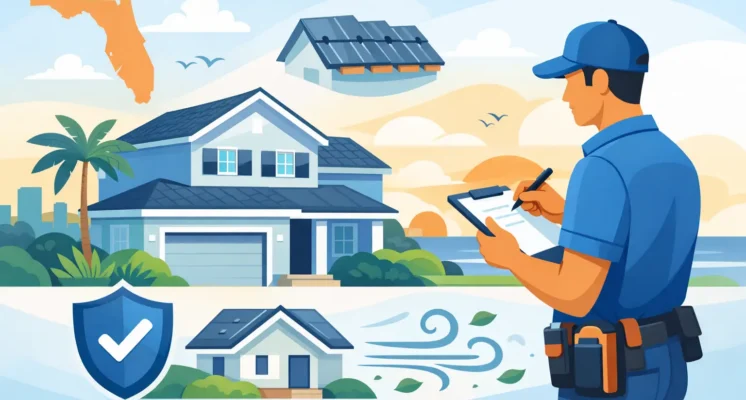
Florida Wind Mitigation Inspection Guide for Homeowners
A roof can look perfectly sound from the driveway and still leave valuable insurance credits on the table. For Florida homeowners, a wind mitigation inspection is a focused review of the construction features that help a home stand up to high winds. This Florida wind mitigation inspection guide explains what the inspector looks for, when the report can help, and how to use the results in a thoughtful insurance conversation.
For families with homes in Naples, along the coast, or elsewhere in Florida, this is not simply a paperwork exercise. The report can affect homeowner insurance eligibility, premium credits, and the decisions you make when replacing a roof, upgrading openings, or purchasing a new property.
What Is a Wind Mitigation Inspection?
A wind mitigation inspection documents specific features that reduce the likelihood of wind damage. It is different from a standard home inspection, which evaluates the broader condition of the property. It is also different from a roof certification or a four-point inspection, although an insurer may request one or more of these items when writing or renewing a policy.
The inspector completes Florida’s uniform wind mitigation form, commonly called the OIR-B1-1802 form. The report identifies the home’s wind-resistive features and includes supporting photos, permits, product approvals, or other documentation where applicable. Your insurance carrier then reviews the form under its own underwriting rules and rating system.
A favorable report does not guarantee a certain premium reduction. Insurers calculate credits differently, and a home’s location, replacement cost, roof age, claims history, deductible, and overall coverage package still matter. Yet for many homeowners, especially those with newer construction or meaningful upgrades, a current report is worth pursuing.
Florida Wind Mitigation Inspection Guide: What Gets Reviewed
The inspection centers on the path wind takes through a home. Strong connections from the roof to the walls, walls to the foundation, and protection at openings can reduce the chance that wind enters the structure and causes major damage.
Building code and construction year
The inspector begins with the home’s year of construction and applicable building code. Homes built under newer editions of the Florida Building Code may qualify for certain credits based on their construction date and location. Documentation is still important. A recent build date alone does not prove every feature an insurer needs to verify.
Roof deck attachment
This section considers how the roof sheathing is attached to the roof framing. The type of fastener, its length, and the spacing between fasteners can affect the rating. The inspector may review attic areas, permit records, or roof documentation to establish this feature.
A roof replacement can improve roof deck attachment, but do not assume it did. Ask your roofer for permits, invoices, and any documentation showing the fastening method used. Those records can be useful long after the installation crew has left.
Roof-to-wall connections
This is one of the most valuable areas of the report. The inspector looks for the connectors securing the roof framing to the walls, such as toe nails, clips, single wraps, or double wraps. Generally, more substantial and properly installed connections provide stronger wind resistance and may lead to better available credits.
Access can be the limiting factor. In some homes, finishes, attic configuration, insulation, or soffits make the connection difficult to see. An inspector cannot guess. If a feature cannot be documented, it may not be credited on the form.
Roof shape
A hip roof slopes down on all sides, while a gable roof has vertical end walls. Hip roofs often perform better in high winds because they have fewer broad, flat surfaces exposed to wind pressure. For insurance purposes, a home generally must meet a defined percentage of hip roof coverage to receive the applicable designation.
This is a structural characteristic, not an upgrade most owners should make solely for an insurance credit. If you are planning a substantial renovation or considering two otherwise similar homes, however, roof shape is one practical factor to understand.
Secondary water resistance
Secondary water resistance is a layer or system beneath the roof covering designed to limit water intrusion if wind removes shingles, tiles, or other roof materials. It can be especially meaningful after a storm, when preventing interior water damage may buy time for repairs.
This feature is often installed during a reroof, but it must be documented correctly to be recognized. Keep contracts, permit paperwork, photos taken during installation, and manufacturer information in your home records.
Opening protection
Windows, exterior doors, garage doors, skylights, and other glazed openings are examined for wind-borne debris protection. Qualifying protection may include impact-rated products or approved shutters. The key issue is not whether shutters exist, but whether every required opening is protected to the applicable standard.
A mixed approach can still be effective for protecting your property, but insurance credit classifications can be exacting. For example, an impact-rated front door does not offset unprotected windows elsewhere in the home. Garage doors deserve special attention because their failure can allow damaging pressure into the structure.
When Should You Schedule an Inspection?
A wind mitigation report is particularly useful after a reroof, installation of impact windows or doors, a garage-door replacement, purchase of a home, or completion of a major renovation. It can also be worth reviewing before a homeowner policy renewal if your existing report is old or no longer reflects improvements made to the property.
There is no single expiration date that applies in every situation. Carriers may set their own requirements for the age of a report, and underwriting standards can change. A report from years ago may remain useful, but it may not capture upgrades that could improve available credits today.
Homebuyers should consider timing carefully. Ordering an inspection during the due diligence period can reveal more than a possible discount. It can show whether claimed impact protection is fully documented, whether roof features are visible, and whether a property may face insurance challenges that should be understood before closing.
How to Prepare Without Overcomplicating It
Start by gathering records rather than making assumptions. Your inspector may be able to use building permits, roof contracts, window and door invoices, product labels, engineering documents, or prior inspection reports. If you have shutters, locate any approvals and make sure the inspector can see the panels, tracks, or fastening system.
On inspection day, provide access to the attic, garage, exterior doors, and any storage areas where shutter materials are kept. Clear access does not change the home itself, but it can help the inspector document features accurately. If a feature is concealed, ask whether another form of acceptable evidence may be available before undertaking invasive work.
Avoid making improvements based only on a hoped-for insurance savings. Impact openings and reroof upgrades can bring meaningful resilience benefits, but their cost should be weighed against the likely insurance impact, your long-term plans for the home, and the broader protection they provide. A well-informed decision considers storm safety, property value, maintenance, and coverage together.
Turning the Report Into an Insurance Conversation
Once the form is complete, send it to your insurance advisor promptly. The report should be reviewed alongside your current declarations page and the details of your home, not in isolation. A change in wind credits may be helpful, but it should not distract from questions about dwelling limits, flood exposure, hurricane deductibles, ordinance or law coverage, and personal umbrella protection.
For high-value or coastal homes, the carrier landscape can be just as important as the inspection result. One carrier may recognize a feature differently than another, while certain homes may need a more specialized market because of location, construction, value, or prior loss history. An independent agency can help put the report in context as it evaluates coverage options.
At Galt Insurance, that conversation is part of protecting what matters most: understanding the property, coordinating the insurance portfolio, and helping homeowners make decisions with a dedicated local team rather than a call center.
A Few Common Misunderstandings
A wind mitigation inspection does not certify that a home will survive every hurricane without damage. No inspection can make that promise. It identifies construction features associated with better wind performance and documents them for insurance purposes.
It also does not replace maintenance. Loose roof coverings, aging sealants, deteriorated garage doors, and neglected shutters can create vulnerabilities even when the original construction earned favorable inspection results. Keep the home maintained, follow manufacturer guidance, and revisit documentation after significant work.
Finally, do not confuse a wind mitigation credit with complete hurricane preparedness. Review your evacuation plan, keep a current home inventory, understand your deductibles, and know how to report a claim. The right report is one useful part of a much larger plan for your family and your property.
Before the next renewal or major home project, treat your wind mitigation report as a practical record of how your home is built to weather Florida’s storms. A short conversation now can help you spot useful documentation, ask better questions, and make coverage decisions with greater confidence.