



Insurance Insights
Perspectives on protecting your home, business and everything you value.
Restaurant Liquor Liability: What Owners Need
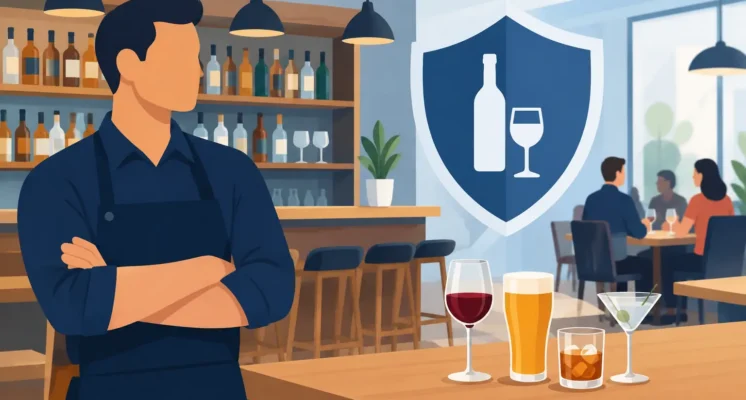
A busy Friday dinner service can change quickly when a guest leaves impaired, causes an accident, or injures someone inside the restaurant. Restaurant liquor liability is the coverage conversation that helps owners prepare for that possibility before a claim threatens the business they have worked hard to build. For Southwest Florida restaurants, where hospitality, tourism, and seasonal volume often meet, the right protection deserves the same attention as the menu, staffing plan, and guest experience.
What restaurant liquor liability is designed to cover
Liquor liability insurance addresses allegations that a business caused or contributed to an injury, property damage, or financial loss by selling, serving, or furnishing alcohol. A claim might involve a guest who is allegedly overserved, a minor who is served alcohol, a fight involving an intoxicated patron, or a crash after a customer leaves the premises.
The policy can help pay for covered legal defense costs, settlements, judgments, and certain related expenses, subject to its terms and limits. That defense component matters. Even when a restaurant believes it acted responsibly, responding to a lawsuit can consume time, management attention, and significant resources.
General liability insurance is essential for restaurants, but it does not automatically solve alcohol-related exposures. Many commercial general liability policies exclude or restrict claims tied to the sale or service of alcohol when alcohol sales are part of the business. A restaurant, bar, brewery, caterer, or venue may need a dedicated liquor liability endorsement or policy to close that gap.
The details depend on the carrier and the operation. A restaurant that sells beer and wine with meals has a different risk profile from a late-night bar, but both can face an alcohol-related allegation. The point is not to assume that limited alcohol sales mean limited liability.
Florida law shapes the restaurant liquor liability discussion
Florida is often described as having a narrower path to dram shop liability than some other states. Under Florida law, liability generally centers on knowingly serving alcohol to a person who is not of lawful drinking age or to a person known to be habitually addicted to alcohol. That legal framework can affect the facts a claimant must prove.
It does not eliminate the risk of a claim, legal costs, licensing consequences, or reputational damage. A restaurant may still have to respond when an incident occurs, and the circumstances surrounding identification checks, staff observations, service records, security footage, and written policies may all be examined.
Restaurant owners should also avoid treating a legal standard as an operating standard. Responsible alcohol service is about protecting guests, employees, and the community, not merely meeting the lowest threshold for liability. Local ordinances, lease requirements, contractual obligations, and carrier underwriting requirements can also create expectations beyond state law.
For a restaurant with multiple locations, private events, delivery activity, or off-site catering, the conversation becomes more layered. The laws and contractual requirements that apply to an event in another state may differ from Florida’s rules. Those exposures should be reviewed before the event, not after an incident.
Where alcohol-related claims can begin
The most serious claims often start with ordinary moments of service: a crowded patio, an enthusiastic group celebrating a birthday, a guest who appears fine until the final drink, or a private event where the host is moving quickly. The issue is rarely one dramatic decision in isolation. Claims often focus on the sequence of service, what employees observed, and whether the operation had reasonable controls in place.
A guest who falls on the premises can create both premises liability and alcohol-service questions. A fight in a parking area can draw attention to security procedures, lighting, staffing, and whether service should have stopped earlier. A vehicle accident may pull the restaurant into litigation even when it occurred miles away.
Third-party delivery and takeout introduce their own questions. If alcohol is sold for pickup or delivery, the business needs clear age-verification procedures and a close look at how contracts allocate responsibility among the restaurant, delivery platform, and driver. A policy built for dine-in service may not fully reflect those operations.
Coverage limits should reflect the real cost of a claim
Choosing liquor liability limits is not simply a matter of meeting a landlord’s or licensing authority’s requirement. A serious injury claim can involve medical costs, lost income, attorneys’ fees, and allegations against the business and its leadership. A limit that looks adequate on a certificate of insurance may feel very different once defense costs and a high-severity claim enter the picture.
Owners should consider their revenue, alcohol-sales percentage, hours of operation, average guest count, location, entertainment, security practices, delivery model, and prior loss history. A neighborhood restaurant that serves wine at dinner may need a different structure from a waterfront venue with live music, a high-volume brunch program, and a busy bar.
The relationship between liquor liability and umbrella or excess liability coverage also deserves a careful review. An umbrella can provide valuable additional protection, but it may exclude liquor liability or require specific underlying limits. It should never be assumed that an umbrella automatically expands every alcohol-related coverage.
Policy language matters just as much as the limit. Review whether defense costs are inside or outside the policy limit, whether assault and battery allegations are limited or excluded, how off-premises catering is treated, and whether coverage applies to events hosted away from the restaurant. These provisions can materially change how a policy responds.
Risk management belongs in the dining room
Insurance is one part of a responsible alcohol-service program. The other part is building consistent habits among managers, servers, bartenders, hosts, and security personnel. Training should be practical enough to use during a crowded shift, not a binder that sits in an office.
Employees need a shared approach to checking identification, recognizing visible impairment, slowing or ending service, documenting unusual incidents, and involving a manager early. They should know that management will support a respectful refusal of service when necessary. A staff member who fears losing a sale or upsetting a guest may hesitate at exactly the wrong moment.
Written policies should address drink promotions, happy-hour practices, shifts ending late at night, private parties, and transportation options for guests who should not drive. The best procedures fit the restaurant’s actual service model. A fine-dining restaurant, a sports bar, and a catering company should not rely on identical rules simply because each serves alcohol.
Documenting incidents is also a practical safeguard. When something happens, managers should preserve relevant camera footage, record factual observations promptly, identify witnesses, and report the matter to the insurer according to policy requirements. Avoid speculation or assigning blame in internal notes. Facts gathered while they are fresh are far more useful than memories reconstructed months later.
Build insurance around the whole operation
Liquor liability rarely stands alone. Restaurant owners often need to coordinate it with general liability, commercial property, business income, workers’ compensation, employment practices liability, cyber coverage, commercial auto, and umbrella protection. A loss can cross categories. For example, an alcohol-related incident may involve an employee injury, a premises claim, a vehicle claim, and an allegation that management failed to enforce its policies.
This is where a relationship-led insurance review can make a difference. Rather than renewing a policy based only on last year’s application, owners benefit from a conversation about what has changed: expanded outdoor seating, new delivery partners, later hours, entertainment, remodeled space, added locations, or a growing event business. Each change can alter the coverage picture.
Galt Insurance helps business owners bring those moving parts into one coordinated discussion, with a dedicated team focused on the restaurant’s broader risk profile rather than a single policy in isolation. Carrier options, contract requirements, and policy terms should be considered together so the coverage supports the way the business actually operates.
A better question to ask before the next busy season
The right question is not, “Do we have liquor liability?” It is, “If an alcohol-related incident happened after service tonight, would our people, procedures, and insurance respond the way we expect?” Answering that question honestly creates an opportunity to strengthen training, refine operations, and protect the restaurant’s future while continuing to serve the community with confidence.