



Customizing Insurance for Florida Restaurant Owners
Table of Contents
- Why Standard Policies Fall Short for Florida Restaurant Owners
- Restaurant General Liability Insurance Requirements
- Florida Coastal Property Insurance Costs and What Drives Them
- Business Interruption Insurance for Restaurants
- Building a Customized Florida Restaurant Insurance Policy
- Climate-Specific Risk Mitigation and Post-Claim Recovery
- How Galt Insurance Consolidates Your Coverage
- Conclusion
Last Updated: August 24, 2026
Why Standard Policies Fall Short for Florida Restaurant Owners
Standard commercial insurance policies are built for average risk. Florida restaurants are anything but average.
The combination of hurricane exposure, coastal flooding, year-round humidity, alcohol service, delivery operations, and seasonal staffing creates a risk profile that generic policies routinely fail to address. A restaurant owner who grabs an off-the-shelf business owners policy is almost certainly underinsured in at least two or three critical areas. Customizing insurance for Florida restaurant owners isn’t a premium service, it’s a baseline necessity.
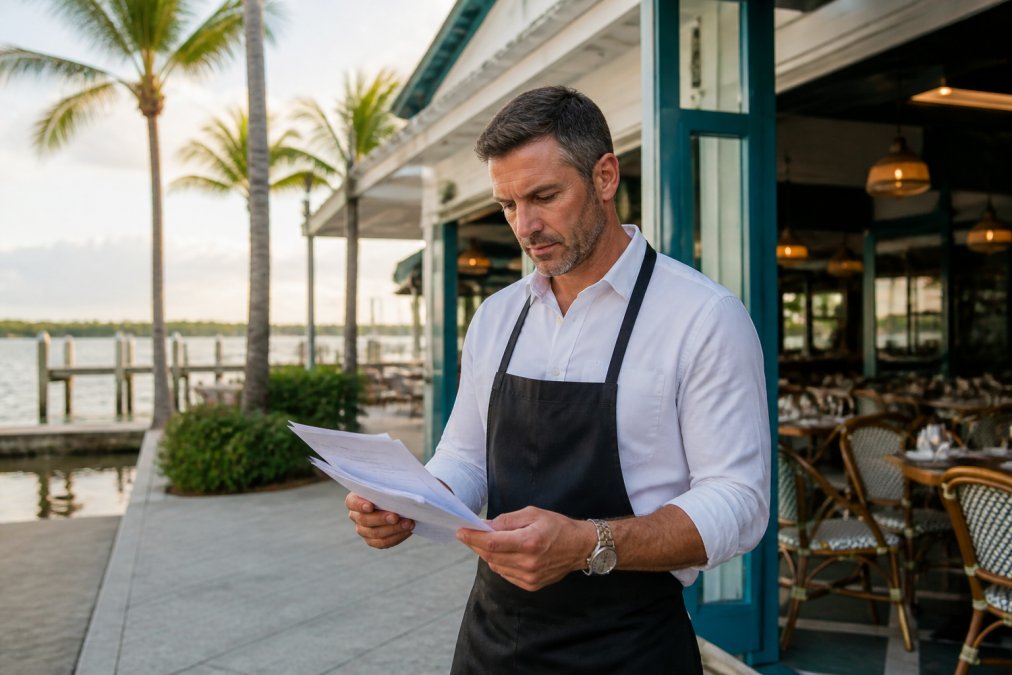
At Galt Insurance, we work with restaurant operators across Florida who discover coverage gaps only after a claim, the worst possible time to find out your windstorm deductible is structured differently than you assumed, or that your general liability policy excludes liquor-related incidents. This guide walks through every coverage layer a Florida restaurant genuinely needs and explains why each requires deliberate customization rather than default settings.
Restaurant insurance isn’t a checklist. It’s a system where every piece interacts with the others.
| Coverage Type | Why It Matters for Florida Restaurants | Common Gap |
|---|---|---|
| General Liability | Slip-and-fall, customer injury claims | Excludes liquor incidents |
| Liquor Liability | Alcohol-related third-party harm | Often sold separately |
| Workers’ Compensation | Employee injuries, state mandate | Seasonal staff misclassification |
| Property Insurance | Building, equipment, inventory | Windstorm/flood excluded |
| Business Interruption | Lost income after covered loss | Waiting period misunderstood |
| Commercial Auto | Delivery vehicles, catering runs | Personal auto exclusions apply |
| Cyber Liability | POS breaches, customer data | Rarely included in BOP |
Restaurant General Liability Insurance Requirements
General liability insurance protects against third-party bodily injury, property damage, and advertising injury claims. For Florida restaurants, the exposure is higher than many operators expect.
General Liability and Liquor Liability Coverage
The biggest mistake restaurant owners make is assuming general liability covers everything that happens on their premises. It doesn’t.
Standard general liability policies typically exclude claims arising from alcohol service. If a customer becomes intoxicated at your bar, leaves, and causes an accident, your general liability policy may offer no protection. Liquor liability insurance fills that gap and must be a separate, explicitly added coverage line for any Florida restaurant serving beer, wine, or spirits.
Florida’s Dram Shop Act creates real legal exposure. Under this framework, businesses that serve alcohol to visibly intoxicated individuals or minors can be held liable for resulting harm. According to the Florida Division of Alcoholic Beverages and Tobacco, establishments holding a liquor license carry specific statutory obligations that translate directly into insurance risk.
General liability also extends to outdoor seating areas, common in Florida’s climate. Slip-and-fall claims from wet patios, tripping hazards near beach access points, and injuries from outdoor furniture all fall under this coverage. Verify that your policy explicitly includes your outdoor footprint.
Seasonal outdoor expansions, temporary tents, pop-up patios, and festival setups often fall outside standard general liability coverage. If your restaurant operates any temporary structures during peak season, verify that your policy extends to those spaces before you open them.
Workers’ Compensation and Employment Practices Liability
Florida law requires most businesses with four or more employees to carry workers’ compensation insurance. For restaurants in the construction trades, that threshold drops to one. The Florida Division of Workers’ Compensation enforces compliance actively, and penalties for non-compliance are severe.
The restaurant industry’s workers’ compensation complexity goes beyond the basic mandate. Seasonal staffing creates classification problems. A worker hired as a server during spring break who gets injured may be misclassified if your policy doesn’t account for actual duties performed. Kitchen staff face burn and laceration risks that carry different actuarial weight than front-of-house roles.
Employment practices liability insurance protects against claims of wrongful termination, harassment, discrimination, and wage disputes, all more common in high-turnover hospitality environments.
Florida Coastal Property Insurance Costs and What Drives Them
Florida coastal property insurance costs have shifted significantly, driven by increased storm frequency, reinsurance market pressure, and legislative changes to the state’s property insurance framework. Understanding what drives your premium is the first step toward managing it intelligently.
Hurricane Deductibles and Windstorm Coverage
A hurricane deductible is typically calculated as a percentage of your insured property value, not a flat dollar amount. That distinction matters enormously for restaurant owners.
For a commercial property valued at several hundred thousand dollars, a hurricane deductible calculated as a percentage can represent a substantial out-of-pocket obligation before coverage kicks in. Many restaurant owners discover this structure only after a storm causes damage. The Florida Office of Insurance Regulation provides guidance on how hurricane deductibles must be disclosed in commercial policies.
Windstorm coverage itself is sometimes excluded from standard commercial property policies in high-risk coastal zones. Coverage must then be purchased separately, either through a private insurer or through the Citizens Property Insurance Corporation, Florida’s state-backed insurer of last resort. Assuming windstorm protection is included without verifying it is a risk no restaurant operator should take.
Ask your insurer to show you the specific hurricane and windstorm deductible language in your policy, not just the summary page. The declarations page shows your deductible percentage, but the policy form defines when it triggers and how it’s calculated. Those details can change your recovery outcome significantly.
Flood Insurance and Food Spoilage Protection
Windstorm and flood are two different perils requiring two different coverage solutions. A hurricane that pushes storm surge into your dining room causes both wind and flood damage, and your property policy may only cover one.
Flood insurance for commercial properties is available through the National Flood Insurance Program, which provides building and contents coverage up to specific limits. For restaurants with high-value commercial kitchen equipment, those limits may be insufficient, making excess flood coverage from private markets important.
Food spoilage protection is a separate endorsement that covers losses from power outages. A multi-day power failure following a storm can result in total loss of refrigerated and frozen product. This coverage is typically available as an add-on and is well worth including given Florida’s storm risk profile.
Business Interruption Insurance for Restaurants
Business interruption insurance covers lost income and ongoing fixed expenses when a covered loss forces temporary closure. For Florida restaurants, this coverage is one of the most consequential decisions in the entire policy-building process.
Business interruption coverage typically has a waiting period before benefits begin, often 48 to 72 hours. If your restaurant closes for three days after a storm, you may receive nothing. Understanding the waiting period structure, the indemnity period length, and what "covered loss" means determines whether this coverage delivers real value.
A common mistake is underestimating the indemnity period needed. A restaurant suffering significant structural damage after a hurricane may need six to twelve months to reopen due to permitting, contractor availability, equipment lead times, and supply chain delays. If your business interruption coverage only provides three months of income replacement, you face a serious gap.
Extra expense coverage pays for costs incurred to resume operations faster, renting temporary equipment, relocating to a pop-up location, or expediting contractor work. For restaurants with strong community ties, maintaining some form of operations during recovery can be worth the investment.
Building a Customized Florida Restaurant Insurance Policy
The real work of customizing insurance happens when you move from individual coverage lines to an integrated policy structure. Every decision about one coverage affects the others.
Business Owners Policy vs. Individual Coverage Lines
A business owners policy bundles general liability and commercial property coverage into a single package, typically at a lower combined premium than purchasing each line separately. For smaller restaurants with straightforward operations, a BOP is often the right starting point.
The limitation is that a BOP is built around standard assumptions. Florida coastal restaurants frequently exceed those assumptions in property values, liquor liability exposure, and the need for separate windstorm and flood coverage. When a BOP’s standard limits and exclusions don’t match your actual risk profile, individual coverage lines calibrated precisely serve you better.
Many restaurant operators benefit from a hybrid approach: a BOP as the base, with endorsements and standalone policies layered on top to address Florida-specific gaps.
Commercial Auto and Cyber Liability Add-Ons
Commercial auto insurance matters for any restaurant operating delivery vehicles, catering vans, or using employee-owned vehicles for business purposes. Personal auto policies exclude commercial use; a delivery driver involved in an accident while on the clock creates liability that flows back to the restaurant without commercial auto coverage.
Cyber liability is the coverage most restaurant owners underestimate. Point-of-sale systems, online ordering platforms, and customer loyalty programs create data exposure. A breach compromising customer payment information triggers notification requirements, potential regulatory penalties, and reputational damage. Cyber liability coverage addresses breach response costs, legal fees, and notification expenses.
Climate-Specific Risk Mitigation and Post-Claim Recovery
Proactive risk mitigation reduces both your exposure and, over time, your premium. Florida restaurant owners who treat climate risk as an operational reality tend to recover faster and pay less.
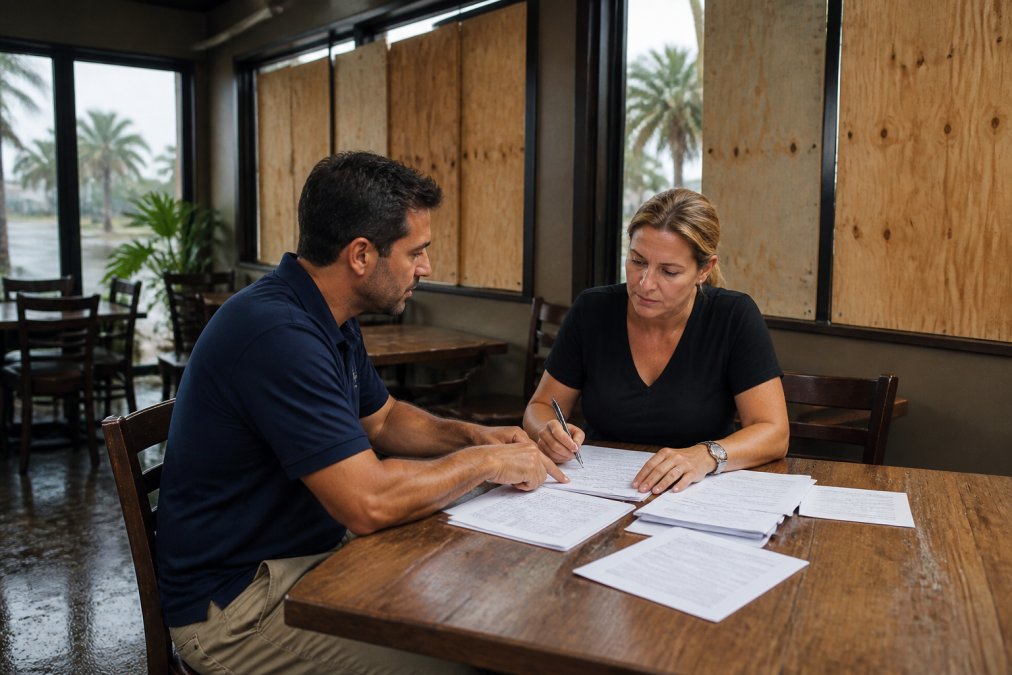
Structural investments matter. Impact-rated windows and doors, roof tie-down systems, and elevated electrical equipment all reduce storm damage severity. Some insurers recognize these investments through underwriting credits; ask specifically whether your property’s storm mitigation features are reflected in your premium. The Florida Institute for Building Construction provides guidance on commercial building standards that align with insurer expectations for coastal properties.
Generator capacity is another operational decision with direct insurance implications. A restaurant that can maintain refrigeration during a multi-day outage avoids the food spoilage claim entirely, protecting your loss history and keeping your renewal premium stable.
When a covered loss occurs, report the claim promptly, document all damage thoroughly before cleanup or repairs begin, and engage your broker actively. Photograph everything and maintain a separate record of all expenses incurred as a result of the loss, these may be recoverable under extra expense or business interruption coverage.
Claims handling in Florida’s commercial insurance market can be slow, particularly after major weather events. Having a broker who actively advocates for your claim, follows up, escalates when needed, and understands your policy language is the difference between a claim that resolves in 60 days and one that drags for a year.
Customizing [insurance for](/insurance/flood-insurance/) Florida restaurant owners means thinking about the post-claim process before you ever need it. Know your policy’s waiting periods, document your property and inventory now, and choose a broker who will advocate for you when the adjuster’s timeline doesn’t match yours.
How Galt Insurance Consolidates Your Coverage
Customizing insurance for Florida restaurant owners requires more than selecting coverage lines from a menu. It requires someone who understands how those lines interact, where the gaps are, and how to structure a policy that holds together when you actually need it.
Galt Insurance consolidates your entire insurance profile into a single, managed relationship. Rather than coordinating between multiple carriers and brokers for your property, liability, auto, and specialty coverages, you work with a dedicated team that understands your full risk picture. That matters enormously when a claim touches multiple coverage lines simultaneously, which is exactly what happens after a major storm.
The questions restaurant owners ask most often before switching brokers are the right ones: Will you actually respond when something goes wrong? Can you handle multiple locations? Can you customize for seasonal staffing and outdoor seating? The answer at Galt is yes, because the entire model is built around consolidation and customization, not standard policies with a personal touch applied afterward.
Regulatory compliance is another area where consolidation pays off. Florida’s insurance regulatory environment for restaurants involves workers’ compensation mandates, liquor license requirements, and commercial auto obligations that interact with your coverage structure. Managing those requirements through a single point of contact reduces the risk of gaps and overlaps that create exposure.
Florida’s restaurant environment is genuinely demanding. The climate risk, regulatory complexity, and operational hazards combine in ways that standard policies aren’t designed to handle. Galt Insurance brings every coverage line together under one roof, with a team that advocates for you through the claims process and builds policies around your actual operation, not a generic template. Get started with Galt Insurance and protect your restaurant with coverage that’s built for where you actually operate.
Frequently Asked Questions
What specific insurance coverages are mandatory for restaurants in Florida?
Florida law requires most restaurants with employees to carry workers' compensation insurance. General liability coverage is not mandated by state law but is typically required by landlords and lenders. Restaurants that serve alcohol must also carry liquor liability insurance to comply with Florida's Dram Shop Act. Beyond these, commercial property insurance, food spoilage coverage, and business interruption insurance are strongly recommended given the state's hurricane and flood exposure. Your specific requirements depend on your lease, financing agreements, and local ordinances.
Why is a standard business owner's policy often insufficient for restaurants?
A standard Business Owners Policy bundles general liability and commercial property insurance, which covers many small businesses adequately. Restaurants, however, face layered risks that a generic BOP rarely addresses fully: liquor liability, food contamination, equipment breakdown, seasonal staffing fluctuations, and Florida-specific perils like hurricanes and flooding. Most BOPs also carry coverage limits that fall short of what a full-service restaurant needs. Customizing florida restaurant insurance means adding endorsements or separate policies to close those gaps before a claim reveals them.
How do coastal property risks affect insurance premiums for dining establishments?
Restaurants located near the coast face higher underwriting risk because of hurricane wind damage, storm surge, and saltwater corrosion. Insurers assess proximity to the coast, building construction type, roof age, and prior claims history when calculating annual premiums. Florida coastal property insurance costs also reflect separate hurricane deductibles, which are calculated as a percentage of insured value rather than a flat dollar amount. A restaurant with a 2% hurricane deductible on a $1 million property carries a $20,000 out-of-pocket exposure before coverage kicks in.
How can Galt Insurance help consolidate my commercial coverage?
Galt Insurance manages your entire insurance profile in one place, assigning a dedicated team rather than routing you through different contacts for each policy. For restaurant owners with multiple coverage lines, property, liability, workers' comp, commercial auto, consolidating with one broker simplifies renewals, claims coordination, and coverage reviews. When a claim occurs, Galt advocates directly on your behalf rather than leaving you to navigate the process alone. Contact Galt Insurance to request a quote and see how your current policies compare.
This article was written using GrandRanker