


Commercial Property vs General Liability Insurance
Table of Contents
- Commercial Property vs General Liability Insurance: Key Differences
- Coverage Comparison Table
- Do You Need Both Types of Coverage?
- Florida Business Insurance Requirements
- Commercial General Liability Exclusions You Should Know
- Average Cost of Commercial Property Insurance
- How to Choose the Right Business Insurance Policy
- Conclusion
Last Updated: August 30, 2026
Commercial Property vs General Liability Insurance: Key Differences
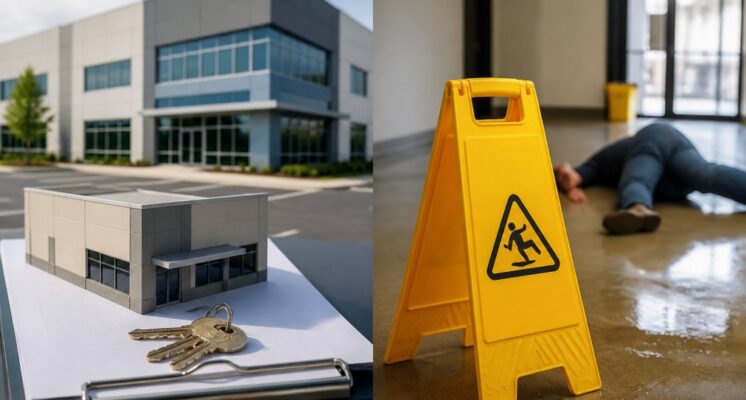
When your business faces a lawsuit, customer injury, or property damage, the wrong insurance coverage can devastate your finances. Many business owners mistakenly assume general liability covers property damage, or that commercial property insurance protects them from lawsuits. These two coverages protect against entirely different risks.
Commercial property insurance covers your physical assets, building, equipment, inventory. General liability protects you when someone else’s property gets damaged or someone gets hurt because of your business operations. You need both, and the gap between them is where most businesses find themselves exposed.
This guide breaks down exactly what each covers, where they overlap, and how to choose the right combination for your business. We’ll walk you through specific exclusions that catch business owners off guard, show you how Florida’s unique risks affect your premiums, and give you a framework for evaluating whether your current coverage is sufficient.
What Commercial Property Insurance Covers
Commercial property insurance protects the physical assets your business owns or rents. This includes your building structure, equipment, inventory, furniture, computers, tools, and supplies. If a fire destroys your storefront, a hurricane damages your roof, or theft empties your warehouse, commercial property insurance covers repair or replacement costs.
Building coverage pays to repair or rebuild the structure after covered perils like fire, wind, lightning, or vandalism. Business personal property (BPP) coverage protects movable assets, inventory, equipment, furniture, computers. Business interruption insurance, often included as an optional endorsement, replaces lost income if a covered loss forces temporary closure.
One critical limitation: standard commercial property policies exclude flood damage. Florida’s exposure to hurricanes and storm surge means many business owners need separate flood insurance. Wind damage from hurricanes IS typically covered, but water damage from flooding is not.
What General Liability Insurance Covers
General liability insurance protects your business when someone else gets hurt or their property gets damaged because of your business operations. It covers bodily injury claims, property damage claims, and personal or advertising injury claims. If a customer slips in your store, your delivery truck damages a client’s fence, or someone claims you defamed them in advertising, general liability covers legal defense costs and settlements.
Bodily injury coverage pays for medical expenses, lost wages, and pain and suffering. Property damage coverage covers costs when your business damages someone else’s property. Legal defense costs are covered even if the claim is unwarranted.
Personal and advertising injury coverage addresses claims of libel, slander, copyright infringement, or false advertising.
A critical distinction: general liability does NOT cover employee injuries (workers’ compensation), professional negligence (errors and omissions insurance), or damage to your own property. It also excludes contractual liability unless specifically endorsed.
Coverage Comparison Table

| Coverage Type | What It Protects | What It Doesn’t Cover | Best For |
|---|---|---|---|
| Commercial Property | Your building, equipment, inventory, furniture, tools | Flood damage, employee injuries, liability claims | Businesses with physical assets and inventory |
| General Liability | Third-party bodily injury, property damage, legal defense | Your own property, employee injuries, professional negligence | Any business interacting with customers or public |
| Combined (BOP) | Property + liability in one policy | Flood, workers’ comp, specialized professional risks | Small to medium businesses wanting simplified coverage |
The fundamental split is clear: property coverage protects your assets; liability coverage protects you from third-party claims. A restaurant needs both, property coverage for kitchen equipment and inventory, general liability for customer slip-and-falls. A consulting firm might prioritize errors and omissions insurance over property coverage since they have minimal physical assets.
Do You Need Both Types of Coverage?
The short answer: almost certainly yes.
If you own or rent a physical location, you need commercial property insurance. Your landlord or mortgage lender will require it. Without it, a single fire or hurricane could destroy your business.
If your business interacts with customers, clients, or the public, you need general liability insurance. This includes retail stores, restaurants, offices, service businesses, contractors, and professional practices. Even careful businesses face accidents, customer trips, vendor injuries, product liability claims. General liability covers legal defense and settlements.
For most Florida businesses, a Business Owner’s Policy (BOP) that bundles property and general liability together is ideal. This simplifies administration, often costs less than separate policies, and ensures you have both coverages. hiring insured services.
Florida Business Insurance Requirements
Florida doesn’t mandate commercial property or general liability insurance by state law, but practical requirements create necessity.
Mortgage lenders require commercial property insurance on financed buildings. Landlords require it in commercial leases. Many business loans require both property and liability coverage. Contracts with major clients often require proof of general liability insurance with minimum coverage limits.
Florida’s environment creates additional insurance needs. Hurricane season (June through November) makes wind and hail coverage essential (noaa.gov). While standard policies cover wind damage, many insurers have tightened coverage or increased deductibles in Florida. Business interruption coverage becomes more valuable because hurricanes can force extended closures.
Coastal properties face higher premiums based on distance from coast, elevation, construction type, and hurricane history.
Workers’ compensation insurance is required by Florida law if you have employees (flgov.com). Professional liability (errors and omissions) insurance isn’t legally required but is essential for doctors, lawyers, accountants, and consultants.
Commercial General Liability Exclusions You Should Know
General liability policies have significant exclusions that leave coverage gaps.
Employee injuries are excluded, that’s why you need workers’ compensation. Your own property is excluded; if your equipment damages your own building, it’s not covered. Property in your care, custody, or control is excluded. Professional negligence is excluded; doctors, lawyers, and accountants need errors and omissions insurance. Contractual liability is excluded unless specifically endorsed. Pollution and environmental damage are excluded. Intentional acts are excluded. Employment practices liability is excluded.
For restaurants, liquor liability is often excluded and requires a separate endorsement. For contractors, coverage for faulty workmanship is excluded.
These exclusions aren’t oversights, they’re intentional gaps that other policies fill. But if you don’t know about them, you’ll discover them too late.
Average Cost of Commercial Property Insurance
Commercial property insurance costs vary widely based on several factors. The Hartford reports that commercial property insurance averages approximately $1,605 per year nationally, but Florida businesses typically pay more due to hurricane exposure and market tightening (thehartford.com).
What drives your premium:
Building replacement value is the biggest factor. Location within Florida matters significantly, coastal properties pay substantially more than inland properties. Construction type affects premiums; concrete block buildings cost less than wood frame structures. Business type influences underwriting; restaurants cost more than offices. Loss history matters; prior claims increase rates. Deductible selection directly affects premium; higher deductibles lower premiums but increase out-of-pocket costs. Coverage limits affect cost; broader coverage costs more than basic coverage.
Rather than guessing at an "average" cost, contact Galt Insurance for a customized quote. Your specific building, location, business type, and coverage needs determine your actual premium.
Underestimating your building’s replacement value is a critical mistake. If your building costs $500,000 to rebuild but you insure it for $300,000, you’ll be underinsured and won’t receive full reimbursement for losses. Have your building professionally appraised to determine accurate replacement cost.
How to Choose the Right Business Insurance Policy

Start by understanding your actual assets and liabilities. What physical property does your business own or control? What’s the replacement cost of your building, equipment, and inventory? What third-party risks does your business create? Do customers visit your location? Do you have employees?
Evaluate your current coverage gaps. Many business owners inherit policies without reviewing them. Does your current policy cover your current business? Have you added services or locations not reflected in your coverage?
Determine appropriate coverage limits by matching your actual exposure. For property coverage, your limit should equal your building’s replacement cost plus inventory value. For general liability, consider your revenue, customer traffic, and potential claim severity.
Consider bundling through a Business Owner’s Policy (BOP) that combines property and general liability. This typically costs less and simplifies administration.
Review exclusions carefully. Don’t assume your policy covers something, read the exclusions section. Ask your agent specifically about gaps.
Shop with an independent agent who can compare multiple insurers. Independent agents can find the best combination of coverage and price for your situation.
Get quotes in writing. A written quote should specify coverage limits, deductibles, exclusions, and endorsements. Compare quotes side-by-side, not just price.
Review annually. As your business changes, your coverage should change with it.
Request a risk assessment from your insurance agent. A professional assessment identifies exposures you might not have considered, from cyber liability to employment practices to contractual liability.
Choosing between commercial property insurance and general liability insurance isn’t really a choice, it’s a necessity to cover different risks. Property insurance protects your assets. Liability insurance protects your business when you’re held responsible for someone else’s injury or damage. Most Florida businesses need both, ideally combined in a Business Owner’s Policy for simplicity and cost efficiency.
At Galt Insurance, we specialize in customizing these policies to your specific business needs. We assess your building’s replacement cost, operational risks, customer interactions, and growth plans, then build a policy that covers what matters for your business while eliminating unnecessary coverage. Get started with Galt Insurance and ensure your business has the protection it deserves.
Frequently Asked Questions
Q: Do I need both commercial property and general liability insurance?
A: Most businesses benefit from both. Commercial property insurance protects your physical assets, inventory, and equipment from fire, theft, and weather damage. General liability insurance covers bodily injury and property damage claims from customers or third parties. Together, they address the two major risk categories businesses face. Whether you legally need both depends on your business type, location, and lender requirements, but having both significantly reduces your exposure to catastrophic losses.
Q: What does commercial general liability insurance not cover?
A: Commercial general liability exclusions typically include professional negligence (errors in your services), employee injuries (covered by workers' compensation), vehicle-related incidents (covered by commercial auto insurance), and certain contractual liabilities. Intentional acts, criminal activity, and pollution are also excluded. Property damage you own is not covered, that's what commercial property insurance addresses. Understanding these gaps helps you identify additional coverage needs like errors and omissions insurance or workers' compensation.
Q: How much does commercial property insurance cost in Florida?
A: Commercial property insurance costs vary widely based on building value, location, business type, coverage limits, and deductible. National averages suggest approximately $1,605 annually, but Florida properties may cost more due to hurricane risk, coastal location, and rising reinsurance costs. Restaurants, retail stores, and coastal businesses typically pay higher premiums. To get an accurate quote tailored to your specific property and risk profile, contact an insurance professional who can assess your exact needs.
Q: What are Florida's specific business insurance requirements?
A: Florida does not mandate general liability or commercial property insurance for most businesses, but lenders and landlords frequently require them as conditions of financing or leasing. Workers' compensation is mandatory if you have employees. Coastal properties face higher insurance costs and may require additional windstorm coverage. Professional services like contractors and healthcare providers may face specific insurance requirements. Consulting with an insurance advisor familiar with Florida regulations ensures you meet all applicable requirements for your industry and location.
This article was written using GrandRanker