


Florida Coastal Property Insurance Costs: 2026 Guide
Table of Contents
- Why Florida Coastal Property Insurance Costs More Than Inland Coverage
- Windstorm Insurance Requirements for Coastal Properties
- FEMA Flood Zones and What They Mean for Your Annual Premium
- Key Factors That Drive Florida Coastal Property Insurance Costs
- Mitigation Discounts for Coastal Properties: Post-Mitigation ROI
- How to Lower Business Insurance Costs on Coastal Commercial Properties
- Navigating the Claims Process After a Coastal Loss
- Conclusion
Last Updated: August 26, 2026
Florida coastal property insurance costs are among the highest in the nation. At Galt Insurance, we work with property owners across southwest Florida’s most exposed coastlines to answer the core concern: why is my premium so high, and what can I actually do about it? This guide breaks down the real cost drivers, coverage gaps most homeowners miss, and mitigation strategies that deliver measurable returns.
Why Florida Coastal Property Insurance Costs More Than Inland Coverage
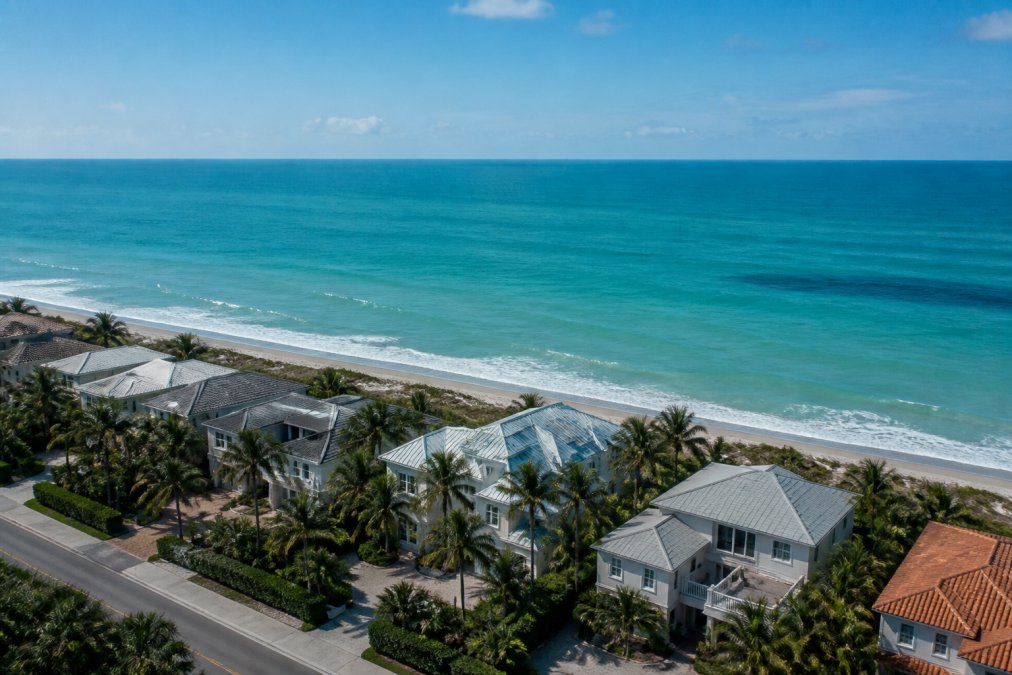
Coastal property insurance costs more because underwriters price for proximity to catastrophic loss. A home on a barrier island faces fundamentally different risks than one five miles inland: storm surge, sustained wind exposure, saltwater corrosion, and compressed evacuation timelines all factor into the exposure calculation.
Coastal Surcharges and Property Exposure
Insurers apply coastal surcharges based on distance from the coast, typically measured in tiers. Properties within 1,000 feet of the shoreline face the steepest surcharges, with tiered pricing extending inland through the first mile or two. A Category 3 storm can push a wall of water far inland, damaging structures well above base flood elevation. Two identical homes can carry dramatically different premiums based on location alone, as coastal surcharges compound with roof age, construction type, and proximity to a fire station.
According to the Florida Office of Insurance Regulation, the state’s property insurance market has seen sustained premium inflation driven by reinsurance costs, litigation, and catastrophic loss exposure, all hitting coastal properties disproportionately.
The Insurance Gap for High-Value Coastal Homes
High-value coastal homes face a coverage gap that standard homeowners policies weren’t designed to address. Construction costs in coastal zones are higher than inland: materials must meet stricter wind-resistance standards, labor is more expensive, and post-storm contractor demand drives rebuild costs above pre-storm estimates. A home insured at purchase price rather than actual replacement cost can leave an owner hundreds of thousands of dollars short.
Ensure your dwelling coverage limit reflects genuine replacement cost, not purchase price or assessed value. An independent agent who understands coastal underwriting can run a replacement cost estimator that accounts for local construction costs, square footage, and finish quality.
Windstorm Insurance Requirements for Coastal Properties
Windstorm insurance requirements for coastal properties are governed by Florida statute and, in many cases, by mortgage lender requirements that exceed the statutory minimum. Properties in wind-borne debris regions must meet specific opening protection standards to qualify for wind coverage from admitted carriers.
Hurricane Deductibles vs. Standard Deductibles
A hurricane deductible is a percentage of the insured dwelling coverage value, typically ranging from one to five percent, that applies specifically to hurricane-related losses. On a home with $500,000 in dwelling coverage and a two-percent hurricane deductible, the homeowner absorbs the first $10,000 of any hurricane claim out of pocket.
This distinction matters enormously when comparing policies. Two policies with identical premiums can carry very different deductible exposures depending on how the hurricane deductible is structured. Standard deductibles, which apply to non-hurricane losses like theft or fire, are typically flat dollar amounts and far less financially impactful.
| Deductible Type | How It’s Calculated | Example on $500K Dwelling | When It Applies |
|---|---|---|---|
| Standard | Flat dollar amount | $1,000-$2,500 | Non-hurricane losses |
| Hurricane (1%) | 1% of dwelling coverage | $5,000 | Named storm triggers |
| Hurricane (2%) | 2% of dwelling coverage | $10,000 | Named storm triggers |
| Hurricane (5%) | 5% of dwelling coverage | $25,000 | Named storm triggers |
| Windstorm | Percentage or flat | Varies by carrier | Wind events, named or unnamed |
Citizens Property Insurance and the Residual Market
Citizens Property Insurance is Florida’s insurer of last resort, created by the state legislature to provide coverage when the private market won’t. For many coastal homeowners, Citizens has become the only option as admitted carriers have exited high-exposure coastal zones.
Citizens is not a permanent solution. The state actively works to depopulate Citizens by moving policies to private carriers through takeout programs. If your property is taken out of Citizens, you have the right to reject the offer, but only if the replacement policy’s premium is within a defined threshold of your Citizens premium. Citizens also carries coverage limitations that private policies don’t, including lower personal property limits and liability limits.
FEMA Flood Zones and What They Mean for Your Annual Premium
FEMA flood zones directly determine whether flood insurance is required, how much it costs, and what coverage limits apply. Coastal properties in Florida fall into several FEMA Special Flood Hazard Areas, with AE and VE zones carrying the most significant implications for premium and coverage.
According to FEMA’s National Flood Insurance Program guidelines, properties in Special Flood Hazard Areas with federally backed mortgages are required to carry flood insurance.
AE Zone vs. VE Zone: Coverage and Cost Differences
AE zone properties face a high risk of flooding, defined as a one-percent annual chance. Flood insurance premiums are calculated based on how the lowest floor relates to the base flood elevation. A home built above base flood elevation in an AE zone will generally pay lower premiums than one built at or below it.
VE zone properties carry the highest flood risk classification. VE zones are coastal areas subject to wave action in addition to flooding, creating compound damage scenarios. Structures in VE zones must meet stricter building code requirements, including open foundation design to allow wave energy to pass beneath the structure. VE zone flood insurance costs significantly more than AE zone coverage for comparable structures.
Flood Insurance Requirements and Coverage Gaps
Standard homeowners policies do not cover flood damage. This is one of the most consequential coverage gaps in coastal property insurance and catches homeowners off guard after major storm events when they discover their policy excludes the damage causing the most destruction.
Flood insurance through the National Flood Insurance Program carries its own coverage limits. For high-value coastal homes, these limits may be insufficient to cover actual losses. Private flood insurance is an alternative worth exploring. Other providers offer private flood coverage with higher limits and, in some cases, broader coverage terms than NFIP policies.
Never assume your homeowners policy covers flood damage. Flood exclusions are standard across virtually all homeowners policies. A separate flood policy is required to cover rising water, storm surge, and related losses. Without it, a major hurricane event can leave you uninsured for the most expensive damage you’ll face.
Key Factors That Drive Florida Coastal Property Insurance Costs
Several property-specific factors determine your coastal property insurance premium. Understanding these factors gives you a framework for evaluating your current coverage and identifying where changes could reduce your annual cost.
Roof Age, Construction Materials, and Underwriting
Roof age is one of the single most impactful factors in coastal property underwriting. Many Florida carriers will not write new policies on homes with roofs older than 15 years, and some have tightened that threshold to 10 years in high-exposure coastal zones. A roof approaching that threshold can trigger a non-renewal notice or a significant premium increase at renewal. Florida home buying steps.
Construction materials matter beyond the roof. Homes built with concrete block construction generally receive more favorable underwriting treatment than wood-frame homes in coastal zones. Impact-resistant windows and reinforced garage doors reduce the probability of a catastrophic opening breach during a hurricane.
Dwelling Coverage Limits and Replacement Cost vs. Actual Cash Value
Replacement cost coverage pays to rebuild your home at current construction costs, without deducting for depreciation. Actual cash value coverage pays replacement cost minus depreciation, which on an older home can result in a payout significantly below what rebuilding actually requires.
For coastal properties, the difference between these two coverage approaches is substantial. Post-hurricane construction costs spike due to contractor demand and material shortages. An actual cash value policy on a 20-year-old coastal home may leave you with a fraction of what rebuilding requires. Most coastal homeowners should carry replacement cost coverage on both the dwelling and personal property.
Mitigation Discounts for Coastal Properties: Post-Mitigation ROI
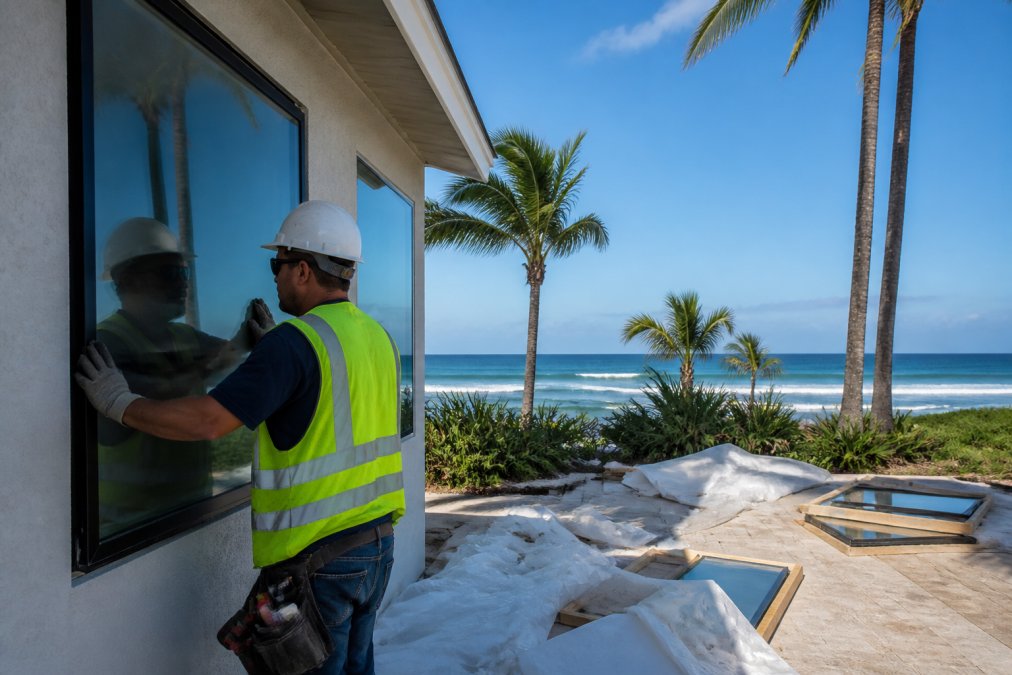
Windstorm mitigation upgrades reduce both your physical risk and your annual premium, and the return on investment is often better than most homeowners expect. Florida’s My Safe Florida Home program and the state’s windstorm mitigation credit system create a direct financial incentive for home hardening investments.
Home Hardening Upgrades That Reduce Premiums
According to the Florida Department of Financial Services on windstorm mitigation, homeowners who complete a wind mitigation inspection and qualify for credits can see meaningful reductions in the windstorm portion of their premium.
The upgrades that generate the largest premium credits include:
- Impact-resistant windows and doors: Replacing standard windows with impact-rated glazing addresses one of the primary vulnerabilities in a wind event.
- Secondary water resistance: A secondary water resistance layer beneath the roof covering reduces interior water damage when the primary roof covering is compromised.
- Roof-to-wall connections: Hip roofs with reinforced connections to the wall structure perform significantly better in high winds than gable roofs with standard connections.
- Reinforced garage doors: Garage door failure is a leading cause of catastrophic wind damage. Wind-rated garage doors are a cost-effective mitigation investment.
Calculating Your Return on Windstorm Mitigation Investments
The post-mitigation ROI calculation is straightforward: divide the annual premium savings by the total cost of the mitigation upgrade to determine your payback period. A homeowner who spends $8,000 on impact-resistant windows and receives a $1,200 annual premium reduction achieves full payback in approximately 6.7 years.
The key step most homeowners skip is getting a wind mitigation inspection before and after upgrades. The inspection documents the specific credits your property qualifies for, and the before/after comparison quantifies the premium impact of each upgrade.
| Mitigation Upgrade | Typical Cost Range | Premium Impact | Estimated Payback |
|---|---|---|---|
| Impact-resistant windows | Varies by home size | Meaningful windstorm credit | Depends on premium savings |
| Secondary water resistance | Lower cost | Moderate credit | Often under 5 years |
| Hip roof conversion | Higher cost | Significant credit | Longer payback, higher resilience |
| Reinforced garage door | Lower-moderate cost | Targeted credit | Often under 3 years |
| Roof-to-wall connectors | Moderate cost | Structural credit | Varies |
Schedule your wind mitigation inspection before committing to any specific upgrade. The inspection report tells you exactly which credits your home currently qualifies for and which upgrades would generate the largest additional credits. That data should drive your investment decision, not a contractor’s recommendation alone.
How to Lower Business Insurance Costs on Coastal Commercial Properties
Commercial property owners on Florida’s coast face the same windstorm and flood exposure as residential owners, compounded by business interruption risk. A retail storefront or restaurant that sustains wind damage and closes for 60 days faces losses extending well beyond physical damage to the building.
Lowering business insurance costs on coastal commercial properties starts with the same mitigation logic that applies to residential properties. Impact-resistant windows, reinforced roofing systems, and documented wind mitigation inspections reduce the property exposure that drives commercial premiums. Many commercial property owners carry insufficient business interruption limits, particularly in coastal zones where post-storm contractor backlogs can extend repair timelines far beyond initial estimates.
Consolidating your commercial coverage with a single broker who understands coastal underwriting is one of the most effective ways to manage costs. An independent agency with access to multiple carriers can place your commercial property with a carrier whose appetite aligns with your specific risk profile.
For coastal commercial property owners, the biggest premium driver is often not the property itself but the coverage structure. Reviewing business interruption limits, flood coverage adequacy, and windstorm deductible exposure with an experienced coastal broker can identify gaps and savings simultaneously.
Navigating the Claims Process After a Coastal Loss
The claims process after a major coastal loss is where the quality of your coverage, your carrier, and your broker relationship becomes tangible. Most homeowners have never filed a major property claim, which means the process itself becomes an additional source of stress at an already difficult moment.
The most important step is documentation before the storm. Photograph and video every room, valuable item, and structural element of your property before hurricane season. Store that documentation off-site or in cloud storage. Carriers require evidence of pre-loss condition, and without it, disputed claims become significantly harder to resolve in your favor.
After a loss, file your claim promptly. Florida statute sets deadlines for filing claims and supplemental claims after a hurricane event, and missing those deadlines can affect your recovery. If your claim is disputed or underpaid, you have options. Florida law allows you to hire a licensed public adjuster to represent your interests in the claims process, or you can invoke the appraisal clause in your policy if you and your carrier disagree on the value of a loss.
Some carriers offer digital claims payment options and mobile apps for claims reporting. Your broker’s role doesn’t end when your policy is bound. At Galt Insurance, we advocate for clients through the claims process, not just at renewal.
| Claims Step | Action Required | Timeline |
|---|---|---|
| Pre-loss documentation | Photograph and video all property | Before storm season |
| File initial claim | Contact carrier immediately after loss | Within days of loss |
| Carrier acknowledgment | Carrier confirms receipt | Florida statute deadline |
| Adjustment begins | Inspector visits property | Statutory timeframe |
| Dispute resolution | Appraisal clause or public adjuster | As needed |
| Supplemental claims | Additional damage identified | Within statutory deadline |
Coastal property insurance in Florida is complex, expensive, and consequential. The gap between a well-structured policy and an inadequate one shows up not at renewal, but at the moment you need to rebuild. Galt Insurance specializes in tailored coastal property coverage, managing your entire insurance profile, including dwelling coverage, flood insurance, windstorm mitigation credits, and commercial property, through a single dedicated team. Whether you’re evaluating your current policy or starting from scratch after a carrier non-renewal, contact Galt Insurance to get a complete picture of your coastal coverage and where the gaps are.
=== FAQ ANSWERS (audit these too, same rules) ===
[1] Q: How much does coastal home insurance typically cost in Florida?
A: Coastal property insurance costs in Florida vary significantly based on flood zone designation, proximity to the shoreline, dwelling coverage limits, and roof age. Barrier island and VE zone properties generally carry the highest annual premiums, often well above the state average for inland homes. The only reliable way to get an accurate figure is to request a quote that accounts for your specific property exposure, construction materials, and any windstorm mitigation features already in place.
[2] Q: Why are coastal property insurance premiums higher than inland rates?
A: Coastal properties face concentrated risk from hurricane-force winds, storm surge, and saltwater corrosion, all of which increase the likelihood and severity of claims. Insurers apply a coastal surcharge to reflect this elevated property exposure. High-exposure locations on barrier islands or in FEMA VE zones also trigger stricter underwriting requirements and higher hurricane deductibles, which are typically calculated as a percentage of the dwelling coverage limit rather than a flat dollar amount.
[3] Q: What are the windstorm insurance requirements for Florida coastal properties?
A: Most mortgage lenders require windstorm coverage for properties in high-risk coastal zones. Florida homeowners can obtain windstorm coverage through private carriers or, when private market options are unavailable, through Citizens Property Insurance, the state-backed insurer of last resort. Policies in coastal counties often carry a separate hurricane or windstorm deductible, commonly set at 2% to 5% of the dwelling coverage limit, which applies specifically to named-storm damage rather than standard perils.
[4] Q: What mitigation discounts are available for coastal properties in Florida?
A: Florida’s My Safe Home program and standard carrier underwriting both reward home hardening upgrades with premium reductions. Qualifying improvements include impact-resistant windows and doors, reinforced roof-to-wall connections, secondary water resistance barriers, and hip roof designs. A licensed wind mitigation inspector documents these features in a report that carriers use to calculate your discount. Depending on the upgrades completed, annual premium reductions can be substantial enough to offset installation costs within a few policy renewal cycles.
[5] Q: Does flood insurance cover all losses on a coastal property?
A: Standard homeowners policies exclude flood damage, so a separate flood policy is required for full protection. National Flood Insurance Program policies cap building coverage at $250,000 and personal property coverage at $100,000, which creates a significant coverage gap for higher-value coastal homes. Private flood insurance through other providers can provide higher rebuild limits and may also cover loss of use, which NFIP policies do not. Properties in AE or VE flood zones with federally backed mortgages are required by law to carry flood insurance.
Frequently Asked Questions
How much does coastal home insurance typically cost in Florida?
Coastal property insurance costs in Florida vary significantly based on flood zone designation, proximity to the shoreline, dwelling coverage limits, and roof age. Barrier island and VE zone properties generally carry the highest annual premiums, often well above the state average for inland homes. The only reliable way to get an accurate figure is to request a quote that accounts for your specific property exposure, construction materials, and any windstorm mitigation features already in place.
Why are coastal property insurance premiums higher than inland rates?
Coastal properties face concentrated risk from hurricane-force winds, storm surge, and saltwater corrosion, all of which increase the likelihood and severity of claims. Insurers apply a coastal surcharge to reflect this elevated property exposure. High-exposure locations on barrier islands or in FEMA VE zones also trigger stricter underwriting requirements and higher hurricane deductibles, which are typically calculated as a percentage of the dwelling coverage limit rather than a flat dollar amount.
What are the windstorm insurance requirements for Florida coastal properties?
Most mortgage lenders require windstorm coverage for properties in high-risk coastal zones. Florida homeowners can obtain windstorm coverage through private carriers or, when private market options are unavailable, through Citizens Property Insurance, the state-backed insurer of last resort. Policies in coastal counties often carry a separate hurricane or windstorm deductible, commonly set at 2% to 5% of the dwelling coverage limit, which applies specifically to named-storm damage rather than standard perils.
What mitigation discounts are available for coastal properties in Florida?
Florida's My Safe Home program and standard carrier underwriting both reward home hardening upgrades with premium reductions. Qualifying improvements include impact-resistant windows and doors, reinforced roof-to-wall connections, secondary water resistance barriers, and hip roof designs. A licensed wind mitigation inspector documents these features in a report that carriers use to calculate your discount. Depending on the upgrades completed, annual premium reductions can be substantial enough to offset installation costs within a few policy renewal cycles.
Does flood insurance cover all losses on a coastal property?
Standard homeowners policies exclude flood damage, so a separate flood policy is required for full protection. National Flood Insurance Program policies cap building coverage at $250,000 and personal property coverage at $100,000, which creates a significant coverage gap for higher-value coastal homes. Private flood insurance through other providers can provide higher rebuild limits and may also cover loss of use, which NFIP policies do not. Properties in AE or VE flood zones with federally backed mortgages are required by law to carry flood insurance.
This article was written using GrandRanker