


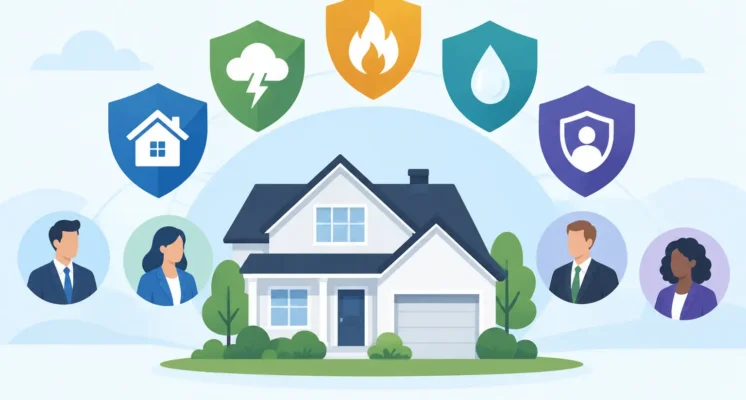
How Homeowners Insurance Carriers Differ
A homeowners policy can look perfectly acceptable on the day it is issued and feel very different after a storm, a water loss, or a major renovation. That is why comparing homeowners insurance carriers should go beyond premium and a familiar name. For Naples and Southwest Florida homeowners, the right choice is often the carrier whose underwriting, policy terms, financial footing, and claims approach fit the home you have built and the life you lead.
A lower premium may be worthwhile when coverage is truly comparable. But a lower price can also reflect a higher hurricane deductible, tighter water-damage limitations, a different roof settlement method, or less flexibility for a high-value home. The details matter long before a claim occurs.
What homeowners insurance carriers actually provide
An insurance carrier is the company that assumes the risk, issues the policy, collects the premium, and ultimately pays covered claims. An independent agency can represent multiple carriers, helping a homeowner compare the options and manage the relationship without having to start from scratch with a different call center every time a question arises.
Carriers do not all serve the same type of property or homeowner. Some are designed for standard homes with straightforward coverage needs. Others specialize in higher-value residences, coastal properties, second homes, condominiums, or households that need home, auto, boat, umbrella, and flood coverage coordinated together.
That distinction is especially relevant in Florida. A home near the coast may have features and exposures that require a more thoughtful review: a tile roof, custom finishes, a pool enclosure, a private dock, guest quarters, valuable collections, or a home that is occupied only part of the year. The appropriate carrier is not necessarily the biggest one or the least expensive one. It is the one that can responsibly insure the risk with terms that make sense for your household.
The coverage questions that deserve a closer look
A declarations page is a useful starting point, but it does not tell the full story. When evaluating policies from different homeowners insurance carriers, begin with the protection that would matter most if rebuilding were necessary.
Replacement cost should reflect today’s rebuilding reality
Your dwelling limit should be based on the cost to rebuild the home, not simply its market value or original purchase price. In a market where construction labor, materials, and code requirements can change quickly, a valuation that has not been revisited may fall short.
Ask whether the carrier offers extended replacement cost or guaranteed replacement cost, where available and appropriate. These features can provide an added margin when a widespread event drives rebuilding costs above the original insured amount. They are not identical, and eligibility varies, so the policy language matters.
Also examine ordinance or law coverage. If a covered loss requires repairs that trigger updated building-code requirements, the extra expense may not be fully covered by a basic policy. This can be a significant consideration for older homes and properties undergoing substantial repairs.
Deductibles can change the practical value of a policy
Florida homeowners commonly face a separate hurricane deductible, often expressed as a percentage of the dwelling limit. On a high-value home, that percentage can represent a meaningful out-of-pocket amount. A policy with a lower annual premium may carry a deductible that changes the financial picture after a hurricane.
It is also useful to understand the difference between a hurricane deductible, an all-other-perils deductible, and any special deductibles for wind, named storms, or water losses. There is no universal best choice. A homeowner who prefers a lower premium and has substantial liquidity may choose differently from a family that wants to reduce uncertainty after a major event.
Water, roof, and personal-property terms vary
Many of the most consequential policy differences are found in water and roof provisions. Sudden and accidental discharge from plumbing may be treated differently than long-term seepage, deterioration, or backup from a sewer or drain. Water backup coverage is often limited or added by endorsement, rather than included at a level that matches the potential loss.
Roof coverage deserves the same attention. A carrier may settle a roof claim based on replacement cost, actual cash value, or terms influenced by the roof’s age and material. A newer roof can improve eligibility with some carriers, while older roofs may lead to limited coverage, inspection requirements, or fewer available options.
For personal property, consider whether scheduled coverage is needed for jewelry, art, collectibles, firearms, wine, or other valuable items. Standard sublimits may be far below what a family actually owns. A thoughtful policy conversation is not about adding every available endorsement. It is about identifying the possessions and exposures that would create a genuine financial or personal hardship if they were not properly addressed.
Financial strength matters, but it is not the only measure
A carrier’s financial strength is one practical indicator of its ability to meet its obligations. Independent financial ratings, reserve practices, reinsurance arrangements, and a carrier’s experience in a catastrophe-prone state can all inform the decision.
No rating can predict every outcome, and no insurer can eliminate the disruption of a widespread hurricane. Still, homeowners should be comfortable asking how a carrier is positioned for Florida risk. A carrier that has a disciplined approach to underwriting may decline certain homes, require wind mitigation documentation, or set firm roof-age guidelines. Those requirements can be frustrating, but they can also reflect an effort to remain stable when conditions become difficult.
It is worth considering whether the company is an admitted carrier or a surplus lines carrier. Admitted carriers are licensed and regulated by the state and are generally connected to state guaranty protections, subject to applicable limits and conditions. Surplus lines carriers can provide valuable solutions for homes that do not fit the standard market, but the regulatory framework and guaranty protections differ. Neither category is automatically right or wrong. The question is whether the homeowner understands the trade-offs and is comfortable with the placement.
Claims service is where promises become personal
A policy is a contract, but a claim is a real-life disruption. After a hurricane, kitchen fire, burst pipe, or theft, a homeowner needs clear communication, responsive adjusters, and a workable path forward.
It can be difficult to judge claims service from advertising alone. Ask practical questions instead. How are claims reported after hours? Is there a dedicated catastrophe process? What documentation should be kept before a loss? How does the carrier handle emergency mitigation? What role will your local insurance team play once a claim is opened?
An agency should not promise a claims outcome it cannot control. It can, however, help clients understand their policy, organize the initial report, communicate with the carrier, and stay engaged when questions arise. That human accountability matters when an online portal is not enough.
Why carrier fit changes over time
The carrier that fit your home five years ago may not be the best fit now. Remodeling, purchasing a boat, acquiring a second residence, adding a teen driver, installing solar equipment, or inheriting valuable property can all change the insurance conversation. So can changes in a carrier’s Florida appetite, renewal terms, inspection standards, or reinsurance costs.
An annual review is a sensible habit, particularly before hurricane season and after a meaningful change in the household. It should include more than a quick check of the premium. Review dwelling value, deductibles, flood protection, liability limits, personal-property schedules, and the way your policies work together.
Flood coverage requires special attention because homeowners insurance generally does not cover flood damage. For coastal and inland properties alike, flood risk can come from storm surge, heavy rainfall, drainage issues, and nearby waterways. A separate flood policy may be essential even when a home is outside a high-risk flood zone.
A better way to compare your options
The most useful comparison puts like against like. Start with the same rebuilding value, comparable deductibles, similar liability limits, and the endorsements that matter to your property. Then look at premium in context with carrier strength, claims reputation, underwriting stability, and service.
For many households, coordination is part of the value. A home policy should be considered alongside auto, umbrella, flood, boat, and other assets, not treated as a standalone transaction. Galt Insurance works with clients through that broader lens, bringing carrier options and coverage decisions into one ongoing relationship.
The right carrier should give you more than a policy number. It should give you confidence that the protection around your home is aligned with what matters most to your family, and that you have knowledgeable people to call when the unexpected arrives.